
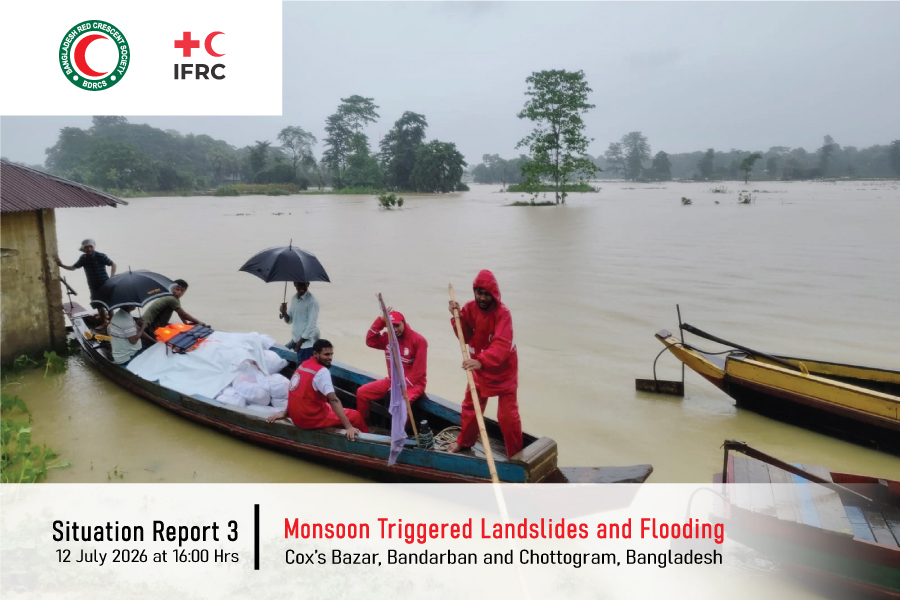
The emergency has now entered its second week and continues to widen in scope. While the low-pressure system that drove the initial spell of extreme rainfall has weakened and moved on over Uttar Pradesh, India, the Bangladesh Meteorological Department (BMD) continues to forecast heavy to very heavy rainfall in spells through 13 July across Chattogram,
Category Archives: Reports
10
Jul
Jul
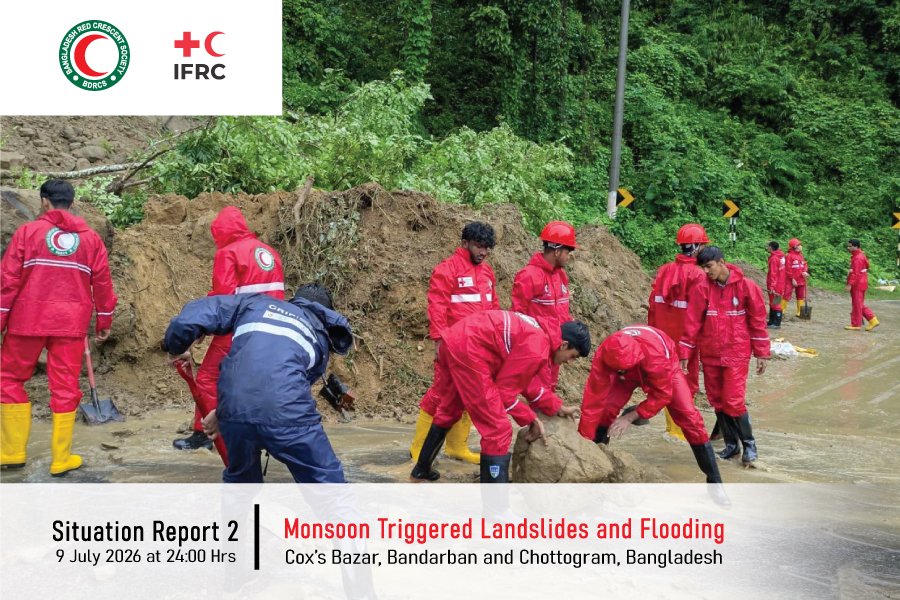
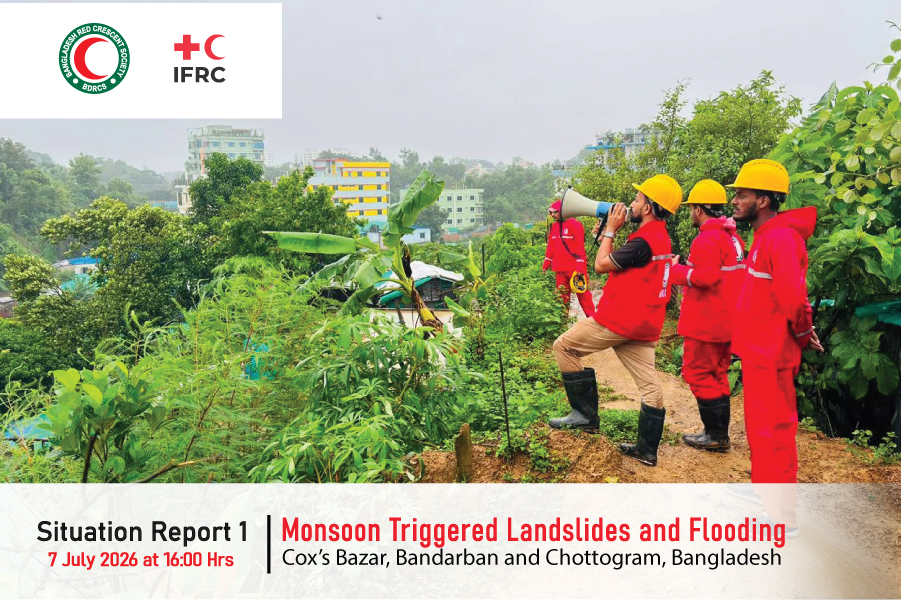
The situation has continued to deteriorate following persistent heavy rainfall, resulting in widespread flooding, landslides, casualties, displacement and damage to households, infrastructure and livelihoods. According to the latest Bangladesh Meteorological Department (BMD) forecast, heavy to very heavy rainfall is expected to continue through 11 July 2026, maintaining a high risk of additional flooding and landslides
07
Jul
Jul
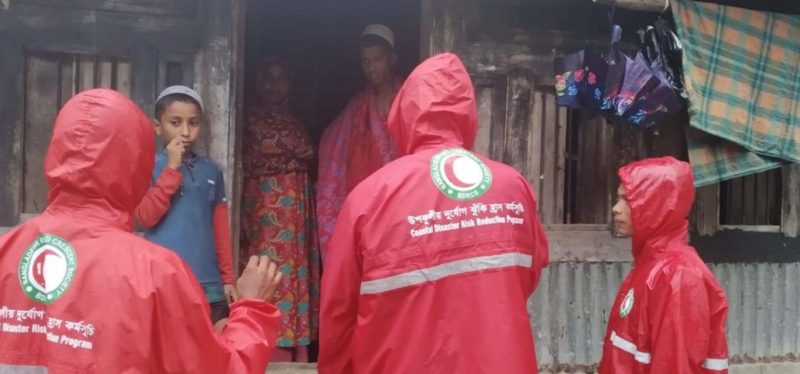
BDRCS has activated its central Emergency Operations Centre (EOC) and is coordinating closely with its Cox’s Bazar (including PMO), Bandarban, and Chattogram units, as well as with district administrations, BMD and other stakeholders. Response actions currently underway include volunteer mobilization, shelter and WASH support, health and MHPSS outreach and public awareness campaigns in high-risk areas.
06
Jul
Jul
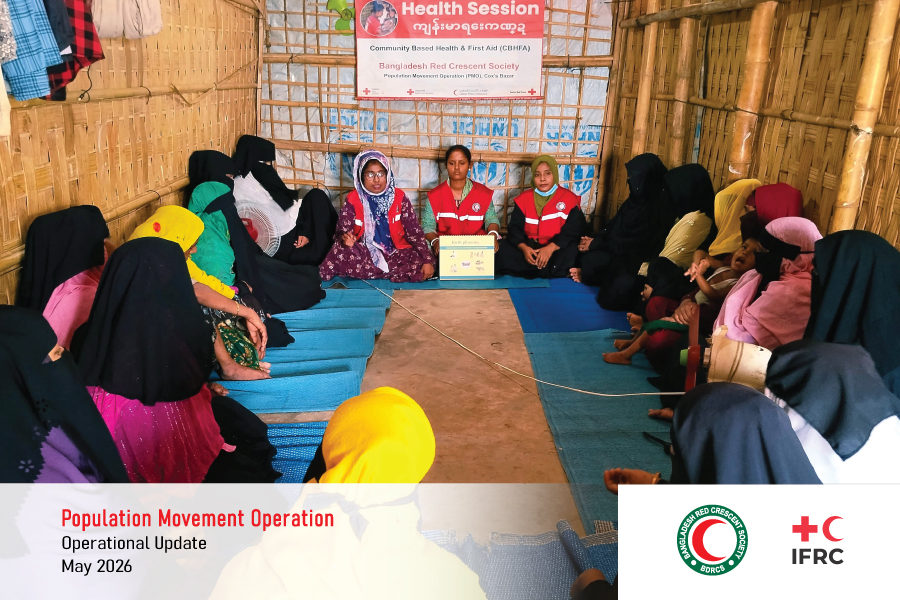
As of May, 1,197,4111 displaced people from Rakhine state of Myanmar live in 33 overcrowded camps in Cox’s Bazar and Bhasan char Island (where 33,792 relocated people live). Nearly nine years of prolonged displacement has been characterized by continuing dependency on humanitarian assistance, influx of new arrivals since 2024 (currently 152,029) due to renewed violence
10
Jun
Jun
২০১৭ সালে মিয়ানমার থেকে ব্যাপক হারে বাস্তুচ্যুত মানুষের বাংলাদেশে আগমনের পর থেকে Bangladesh Red Crescent Society(BDRCS), কক্সবাজারে পপুলেশন মুভমেন্ট অপারেশন (PMO) বাস্তবায়ন করে আসছে। বর্তমানে International Federation of Red Cross and Red Crescent Societies (IFRC) এবং রেড ক্রস রেড ক্রিসেন্ট মুভমেন্টের আটটি অংশীদার সংস্থার সহায়তায় বাংলাদেশ রেড ক্রিসেন্ট সোসাইটি বাস্তুচ্যুত মিয়ানমার জনগোষ্ঠীর জন্য এসব মানবিক কার্যক্রমসিমুহ পরিচালনা করছে।
04
Jun
Jun
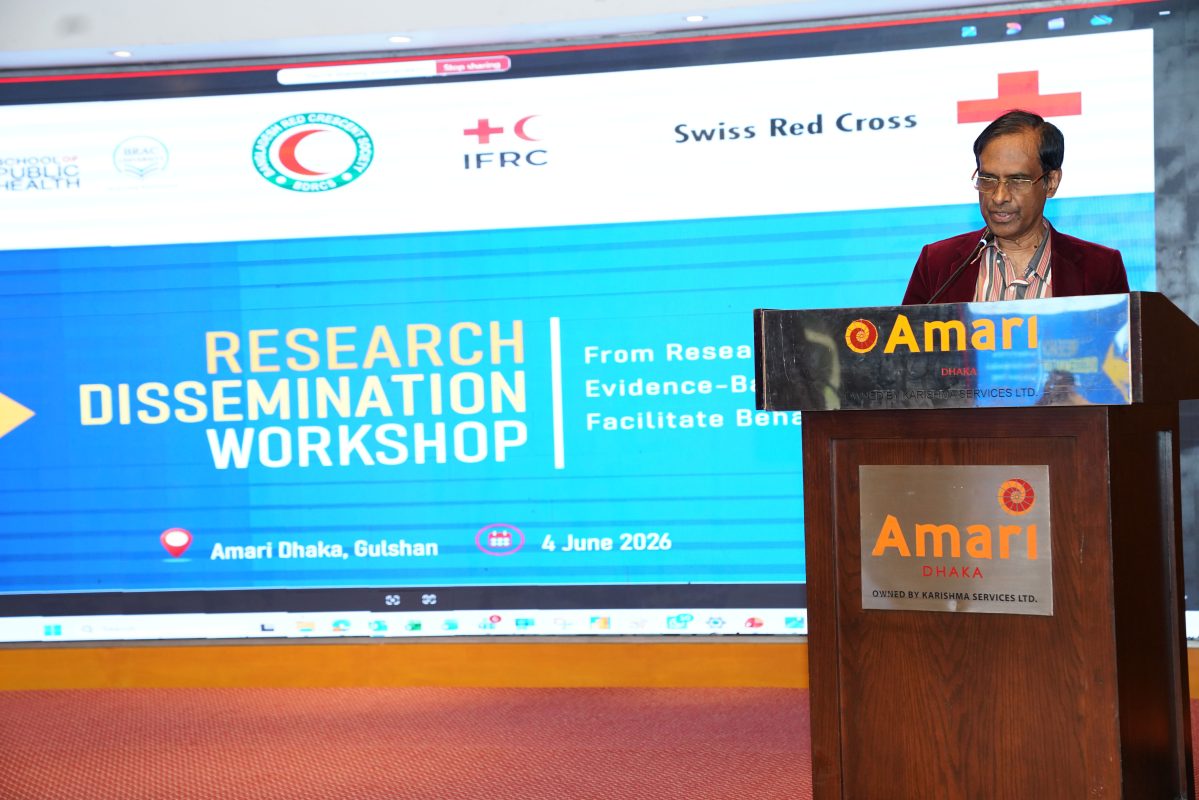
DHAKA, BANGLADESH, Thursday, June 4, 2026: Displaced Rohingya communities in Cox’s Bazar are experiencing vital advancements in sexual and reproductive health (SRH), driven by a significant rise in facility-based deliveries and broader family planning adoption. Preliminary findings disseminated on thursday at a research workshop show that targeted community interventions have successfully boosted institutional delivery rates, expanded
27
May
May
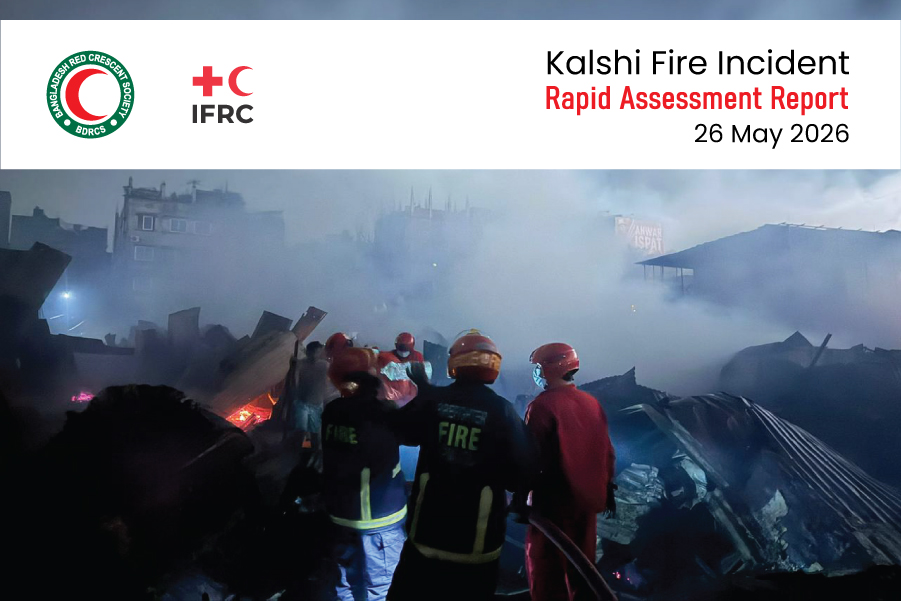
The assessment was conducted jointly by the BDRCS Disaster Response Department and National Headquarters (NHQ) Red Crescent Youth (RCY) volunteers, in close coordination with affected community members, local authorities, and other relevant stakeholders. The report provides an overview of the incident, presents the key assessment findings and identified humanitarian needs, and outlines the immediate response
05
May
May
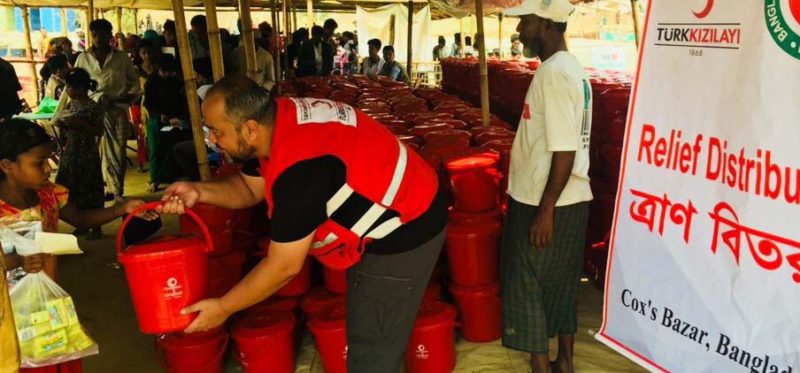
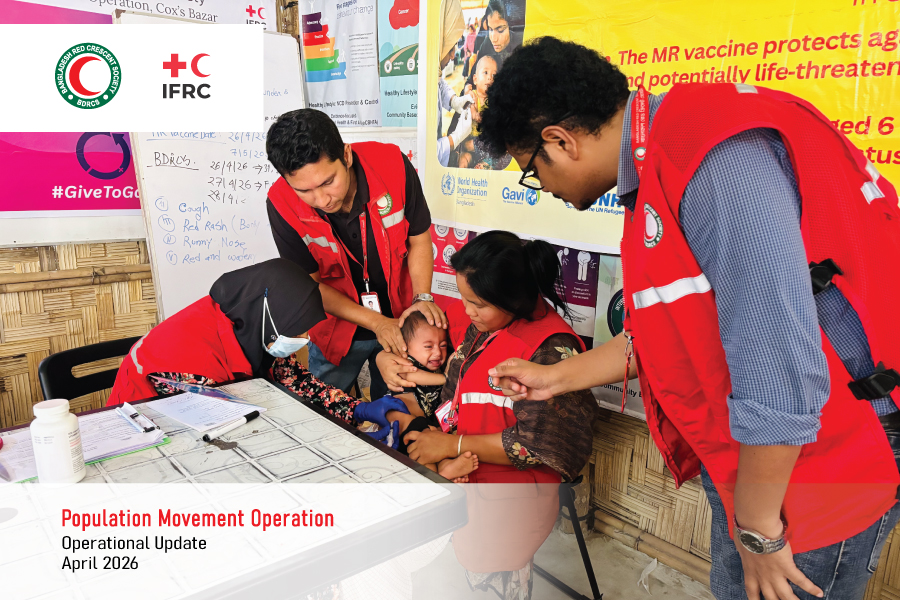
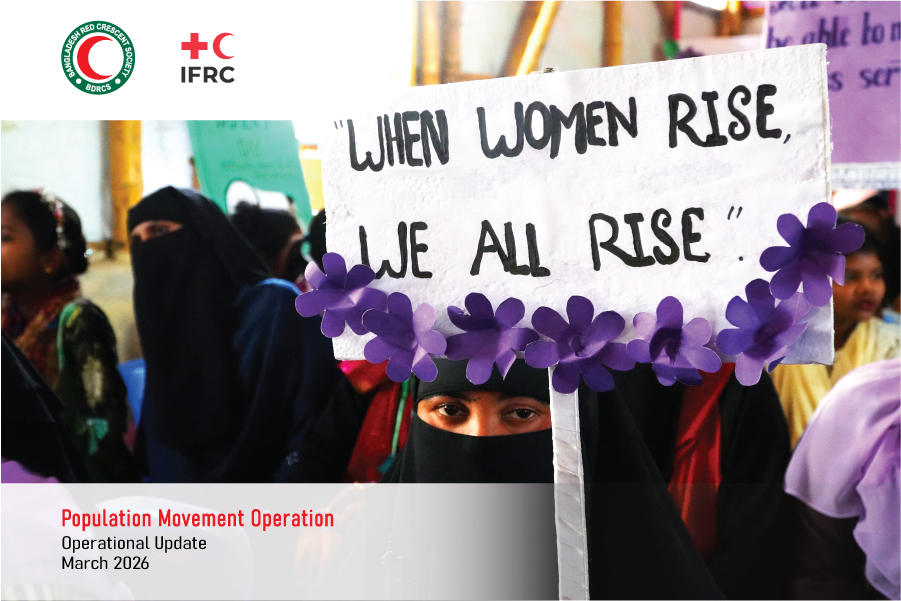
The Bangladesh Red Crescent Society (BDRCS), through its Population Movement Operation (PMO), continues to deliver lifesaving and dignity-driven humanitarian assistance to displaced Myanmar community staying in Cox’s Bazar Camps—one of the world’s most protracted humanitarian crises. In addition to supporting displaced populations across 33 camps, the operation also extends critical services to the affected local
30
Apr
Apr
Heavy to very heavy rainfall across the northeastern region and upstream catchments has caused a rapid rise in water levels in major river systems, including the Surma–Kushiyara, Khoai, and Dhanu–Baulai basins. As of 30 April 2026, the Flood Forecasting and Warning Centre (FFWC) reported 1 river station under severe flood condition, 4 river stations under
23
Apr
Apr
The Bangladesh Red Crescent Society (BDRCS) remains steadfast in its commitment to its humanitarian mission and vision of “strengthening its leading role as a humanitarian organization by mobilizing the power of humanity.” Beyond addressing broad humanitarian challenges, BDRCS has been actively engaged in disaster preparedness, enhancing community resilience, and carrying out a wide range of