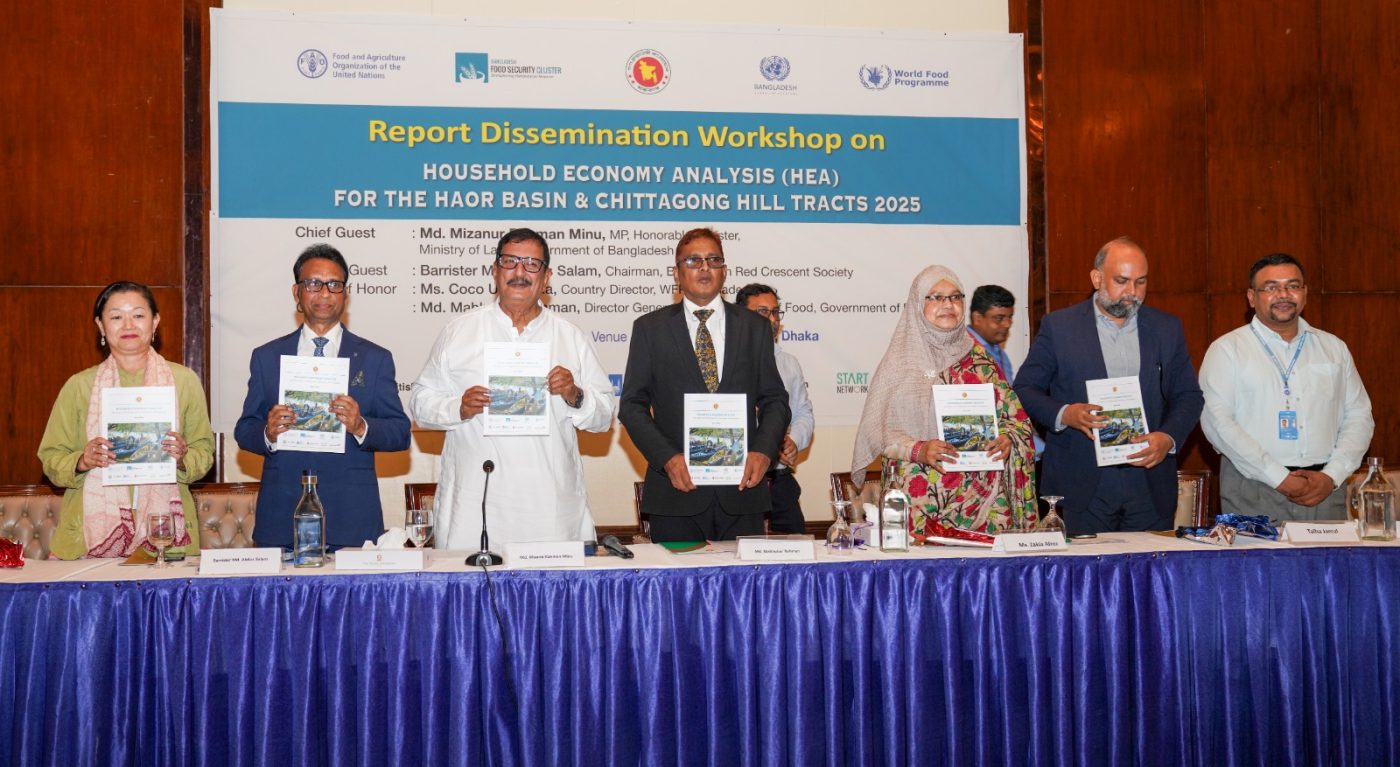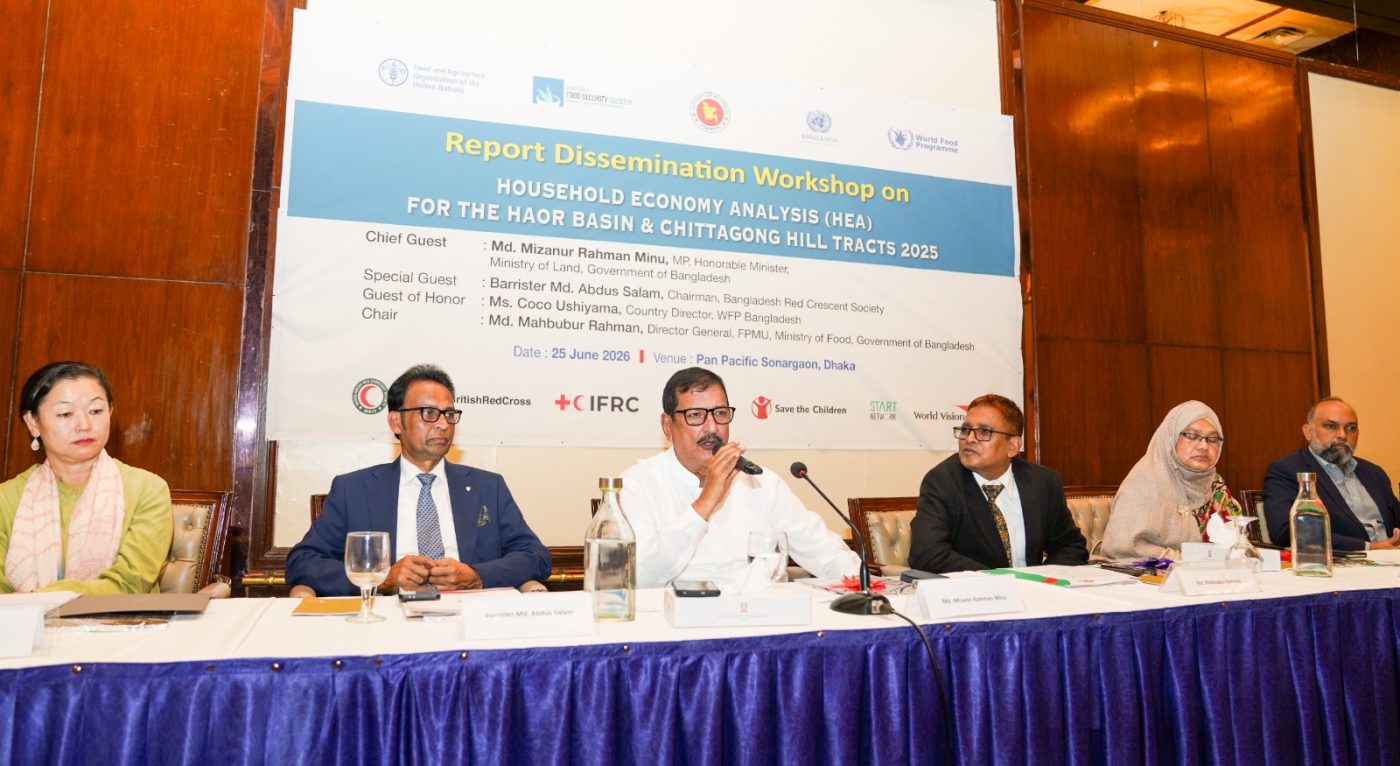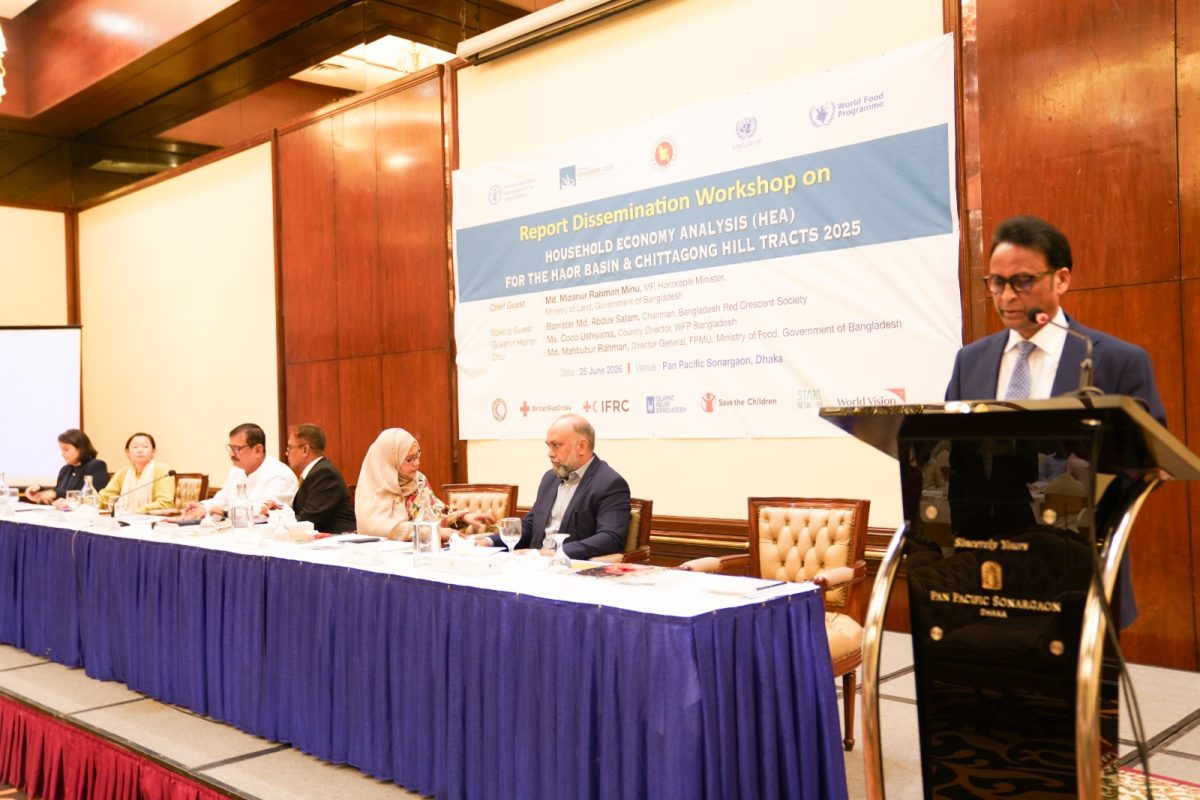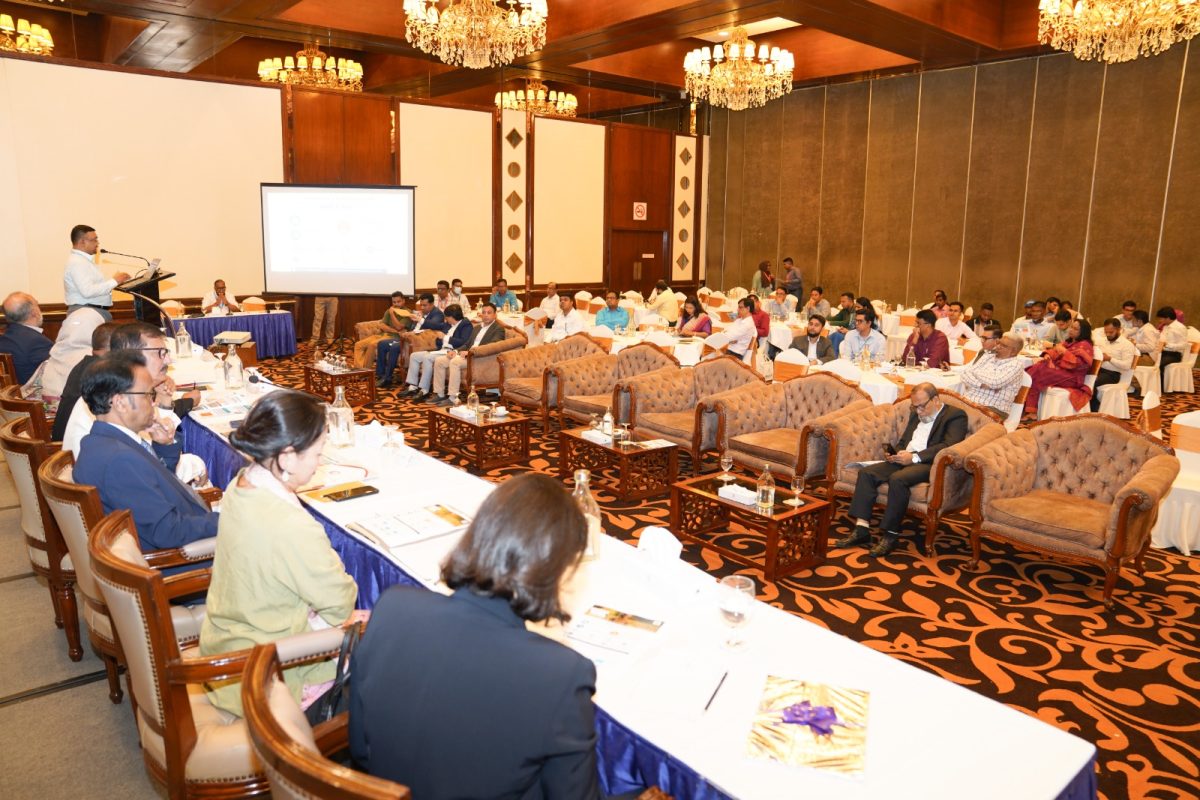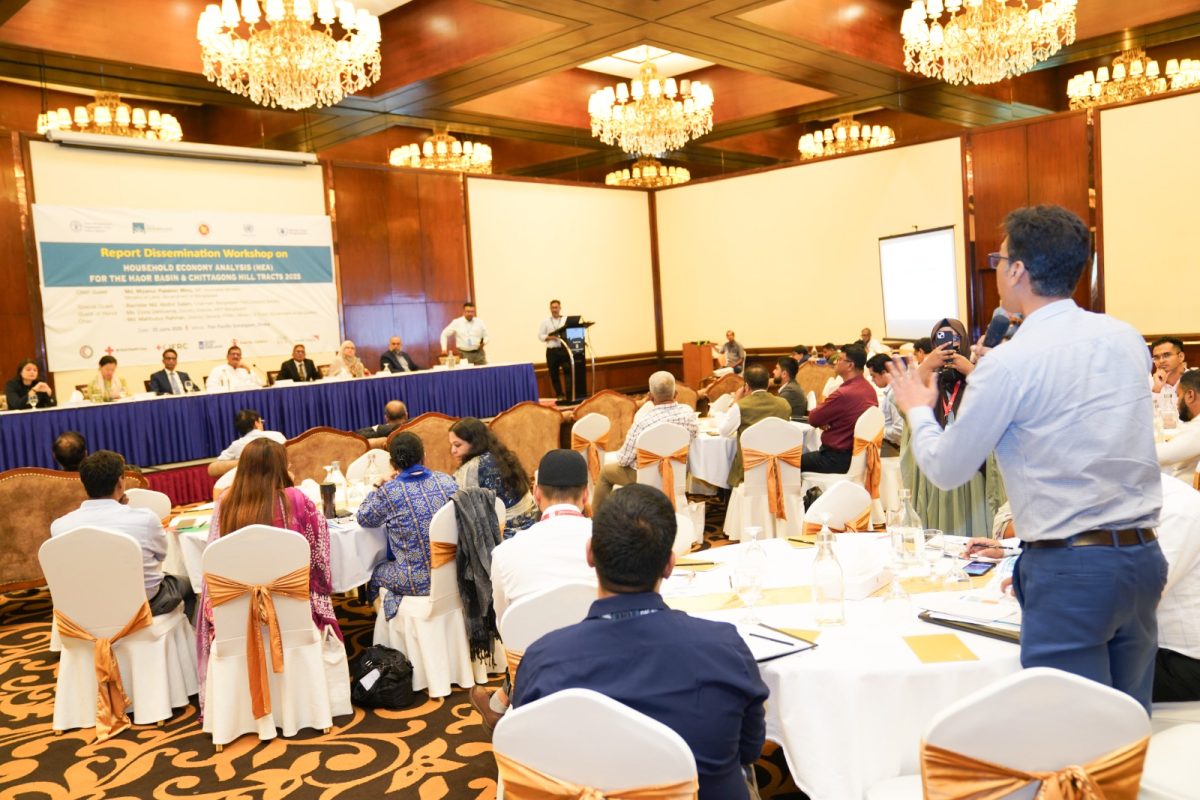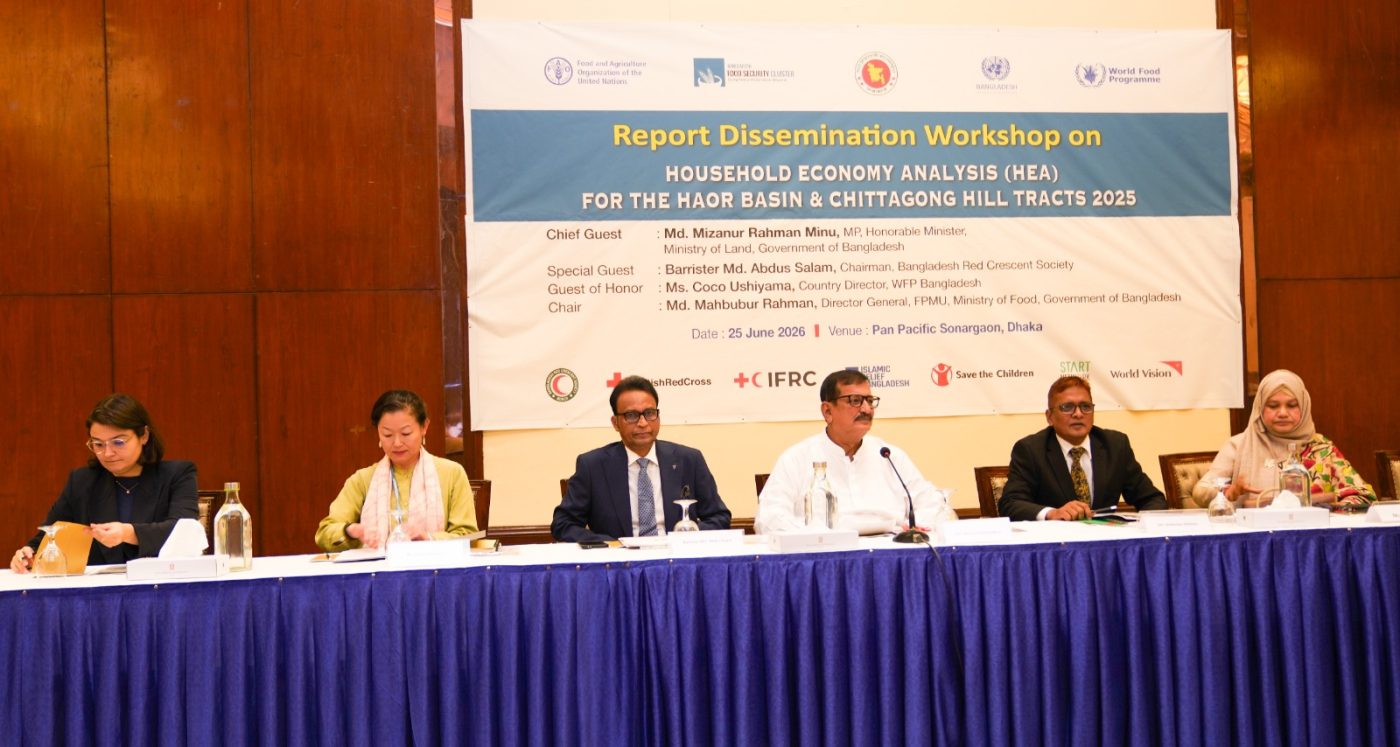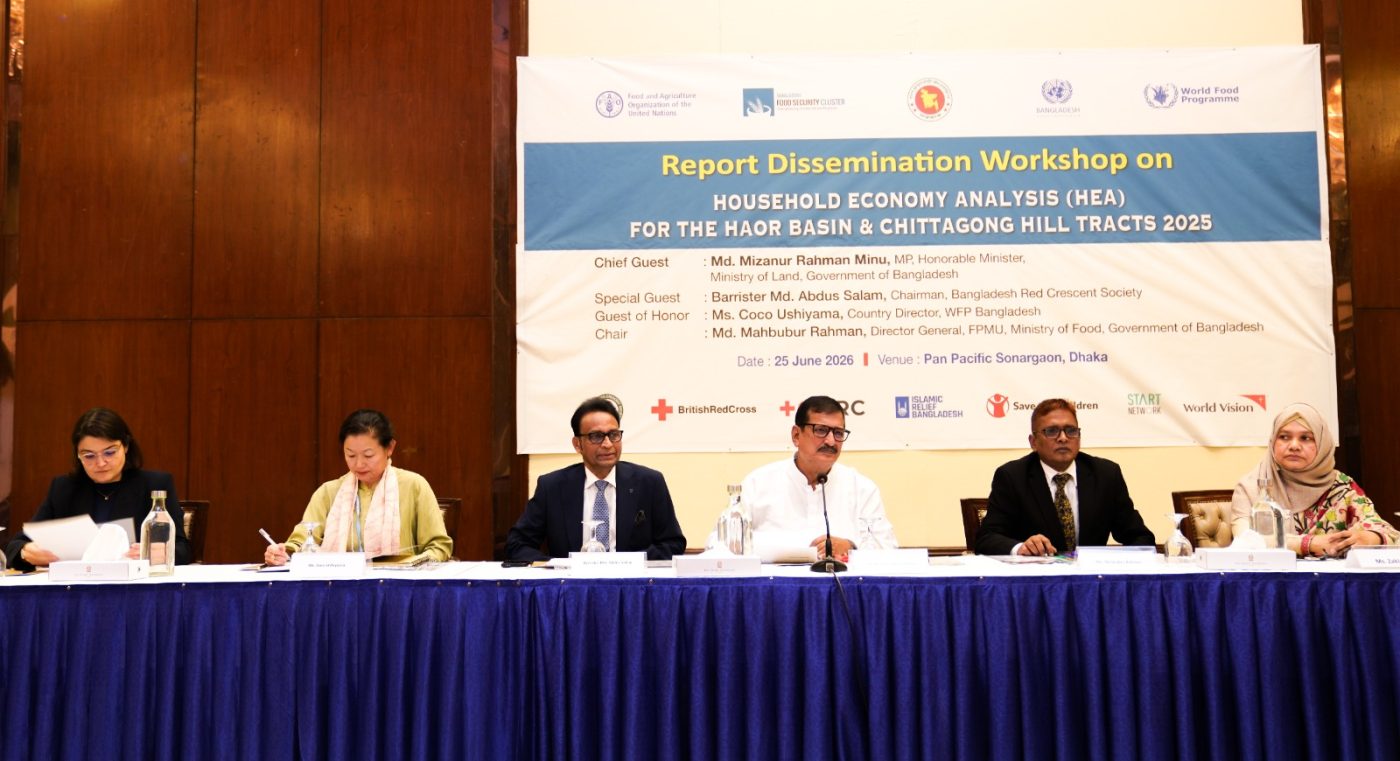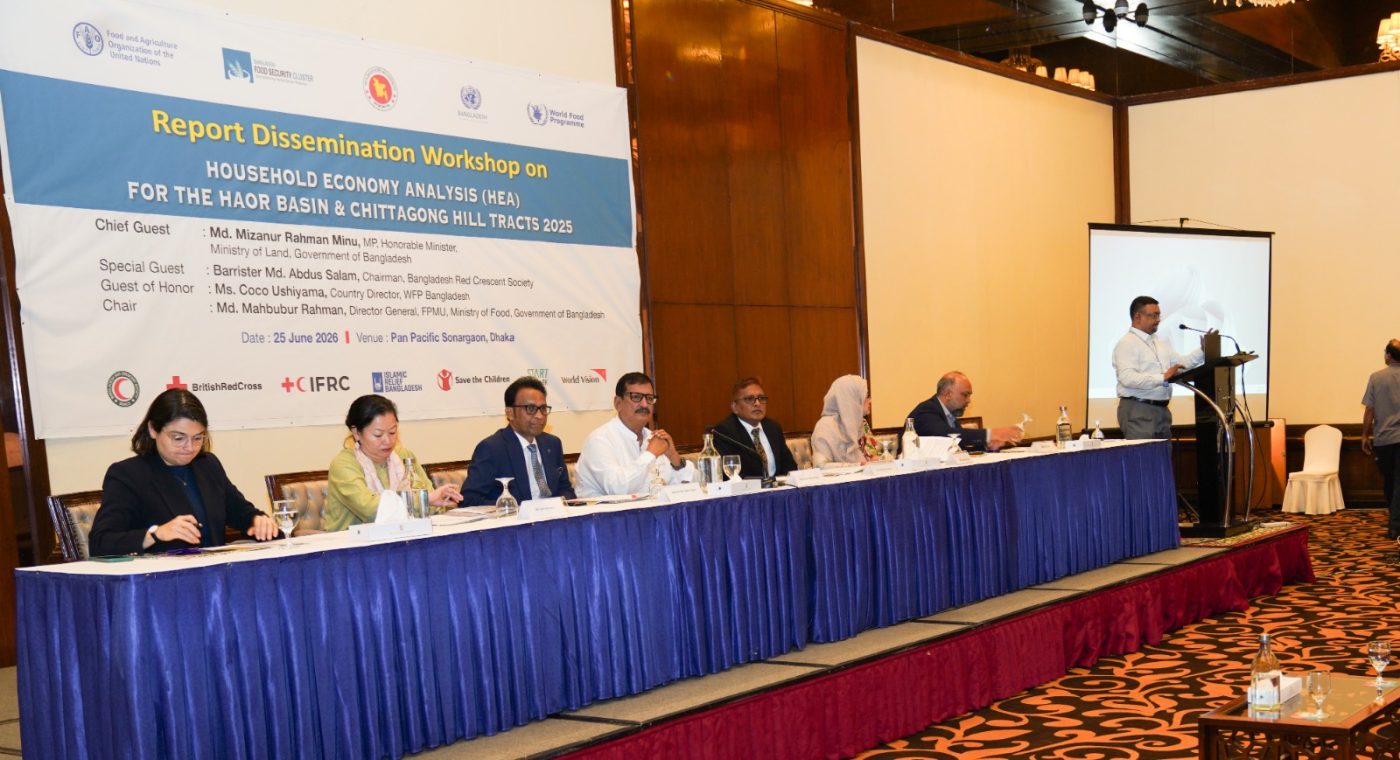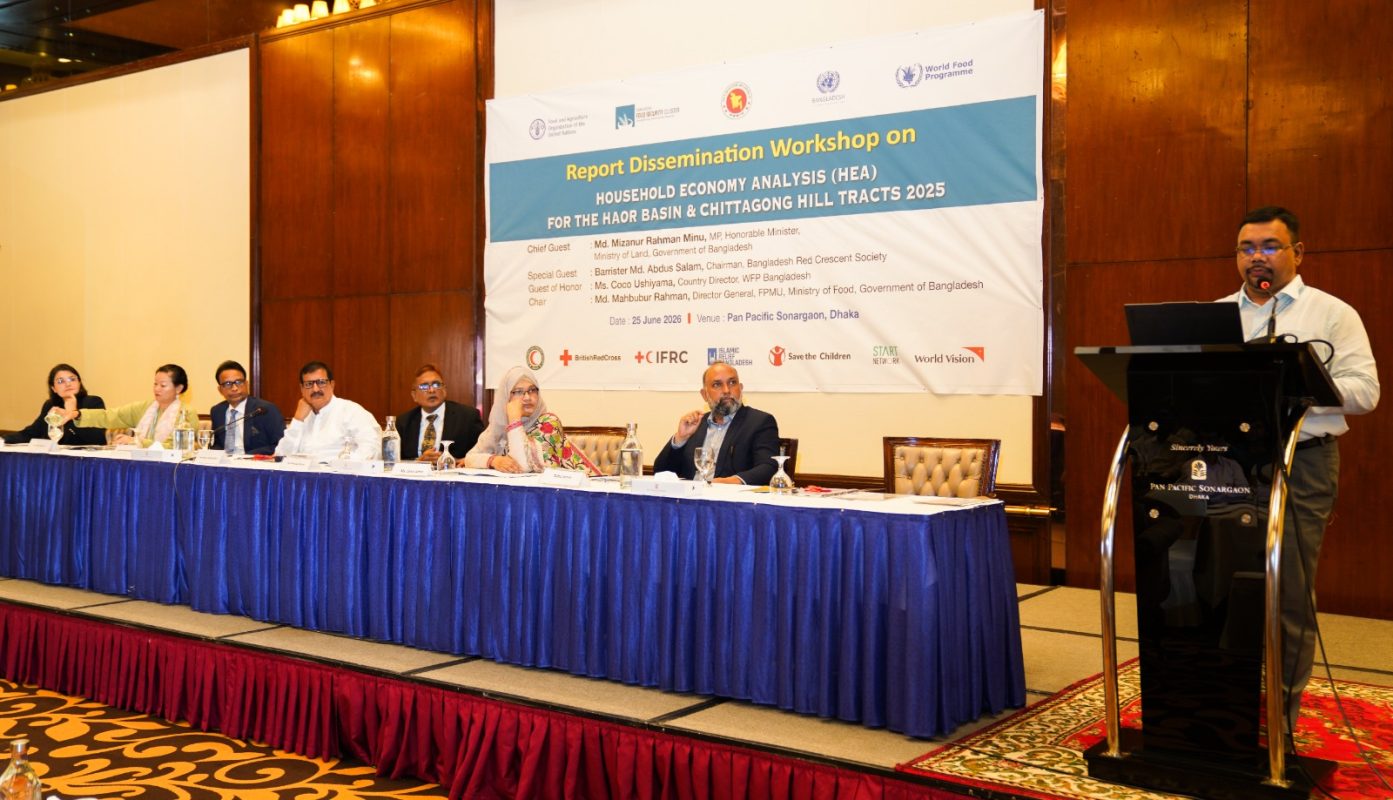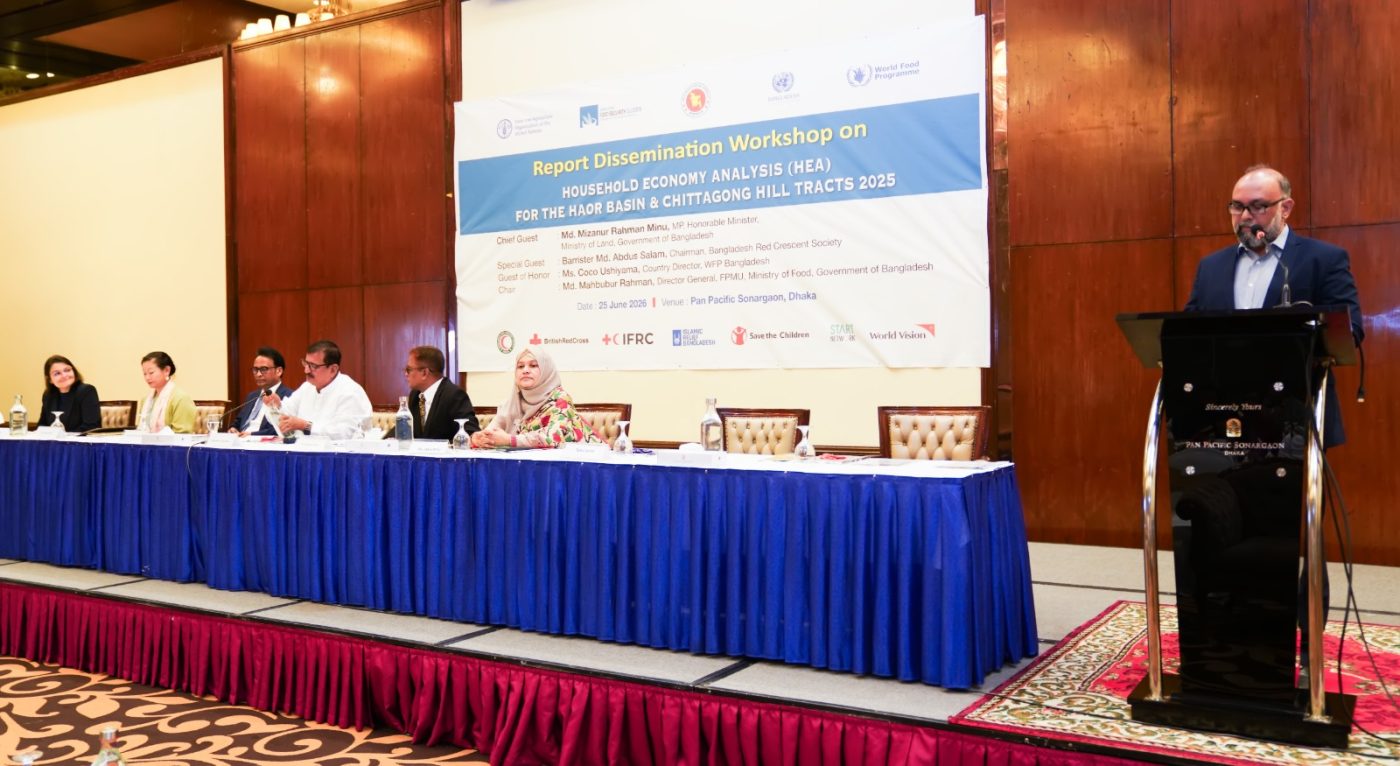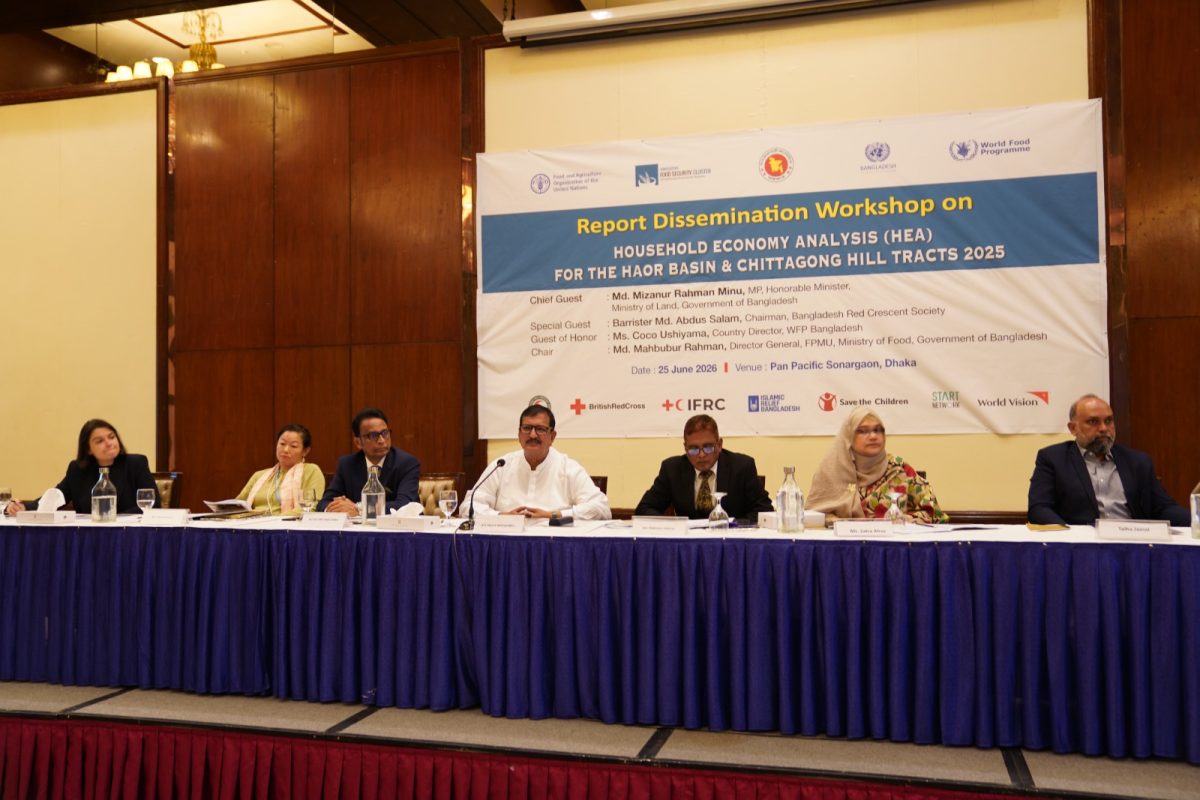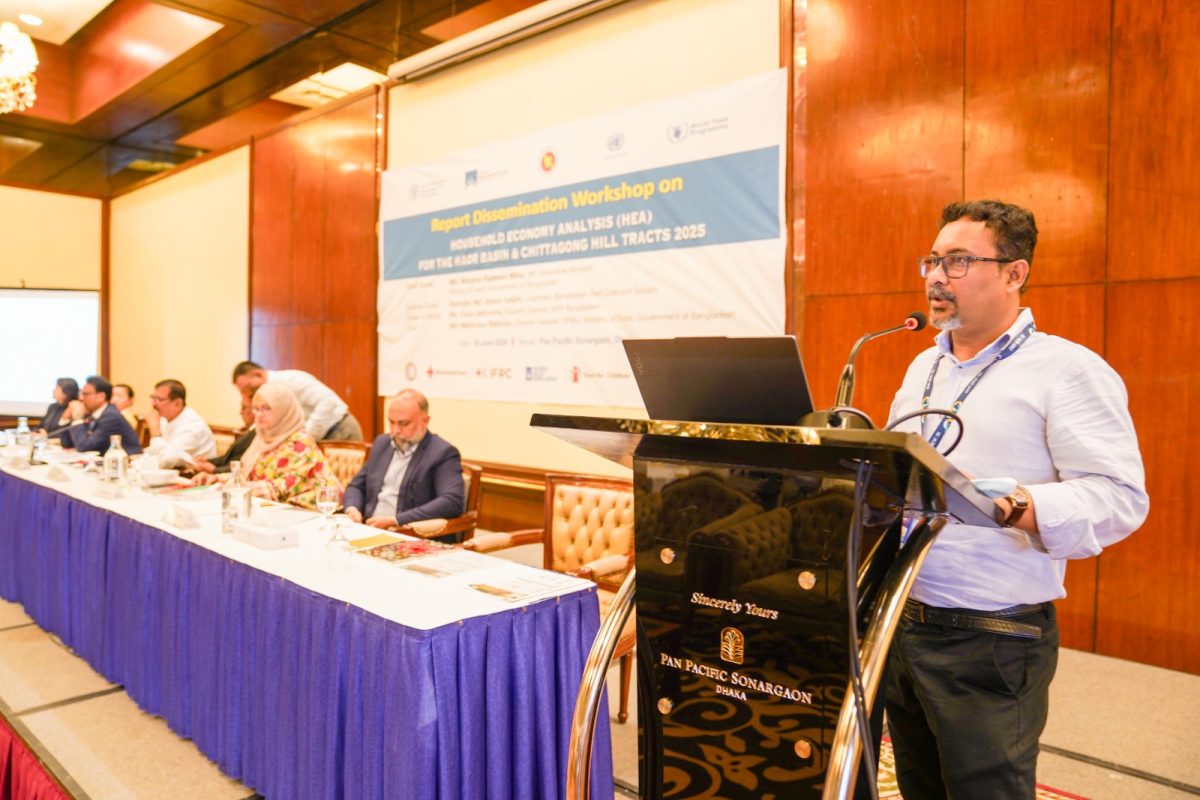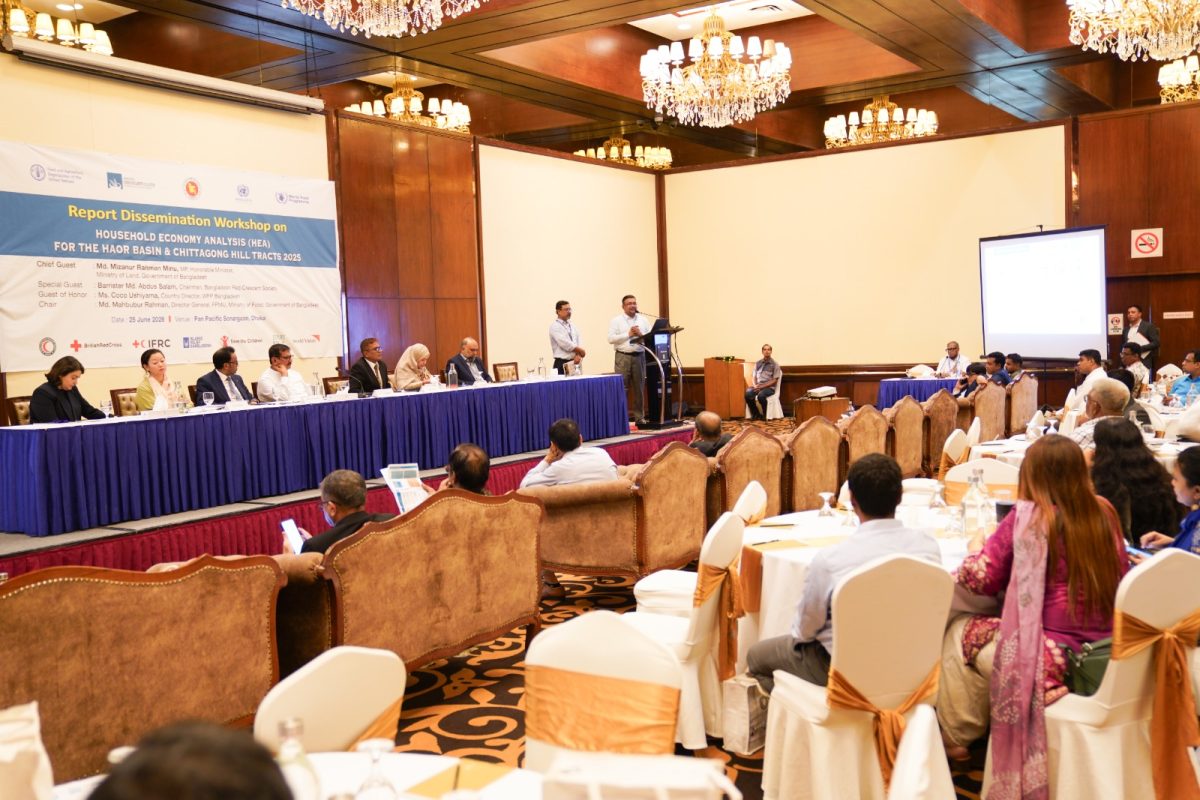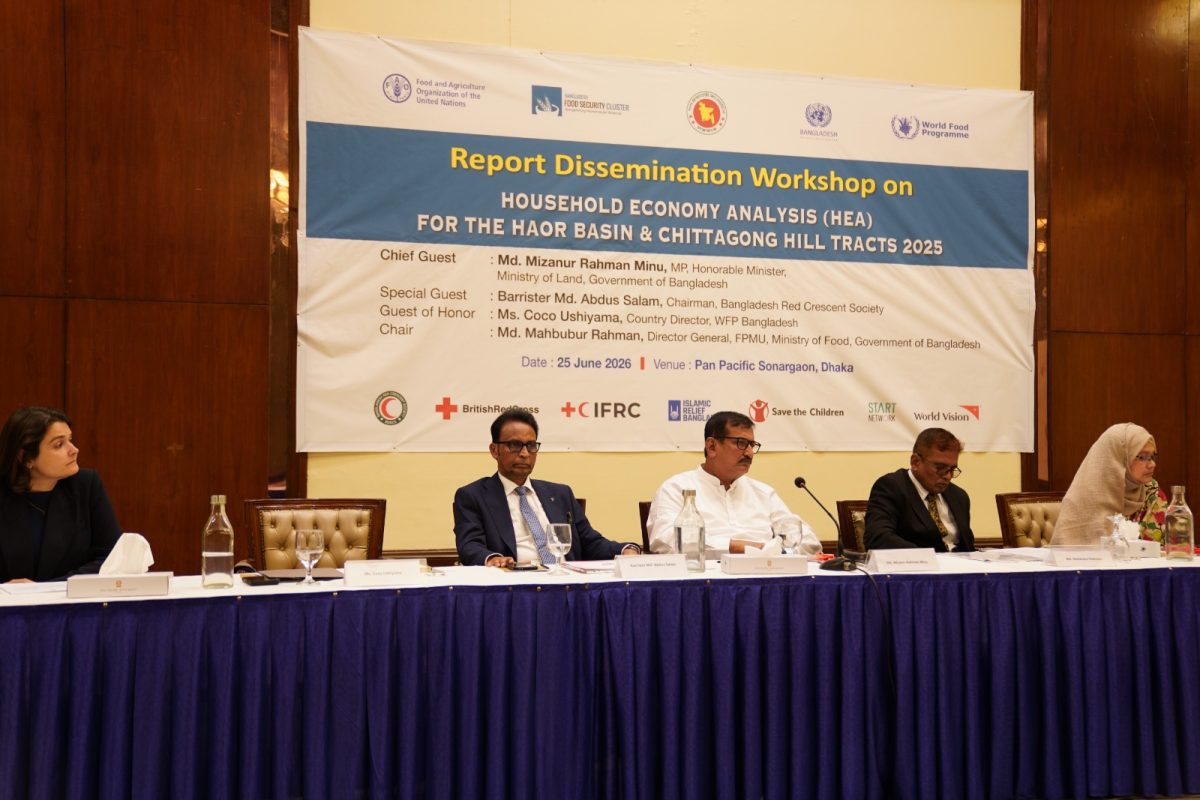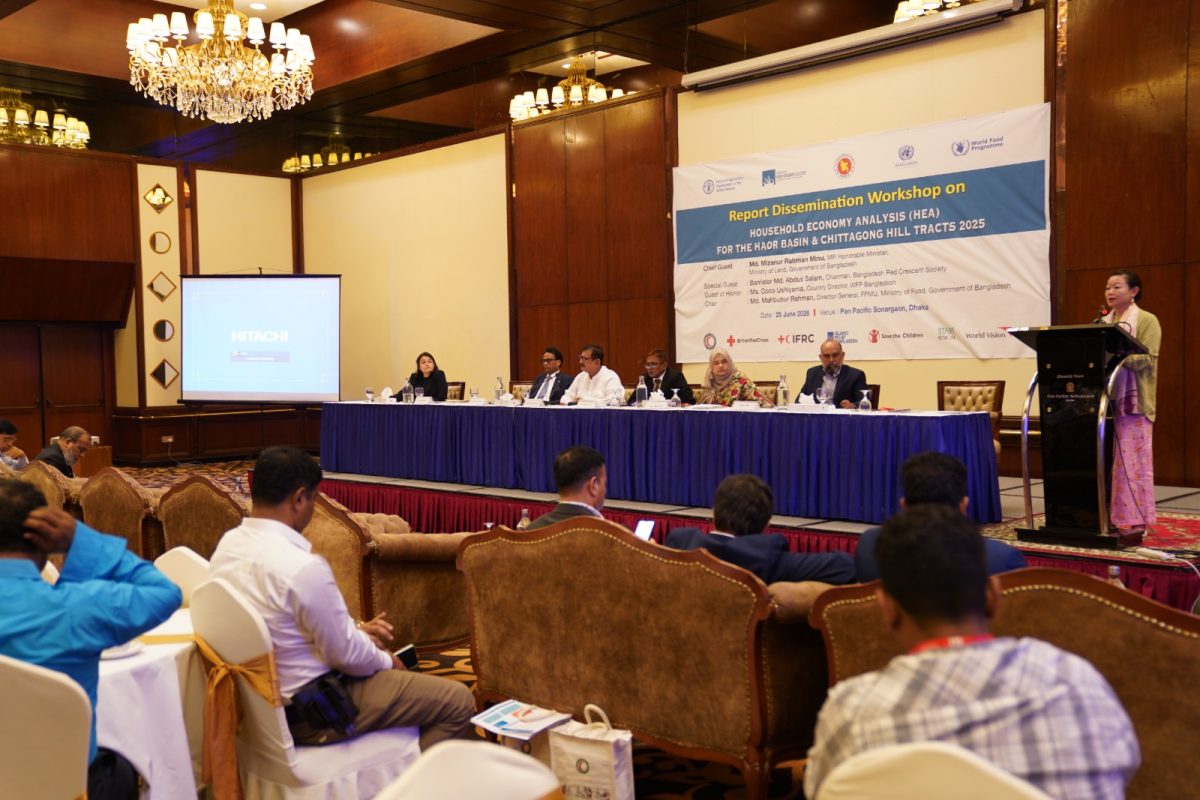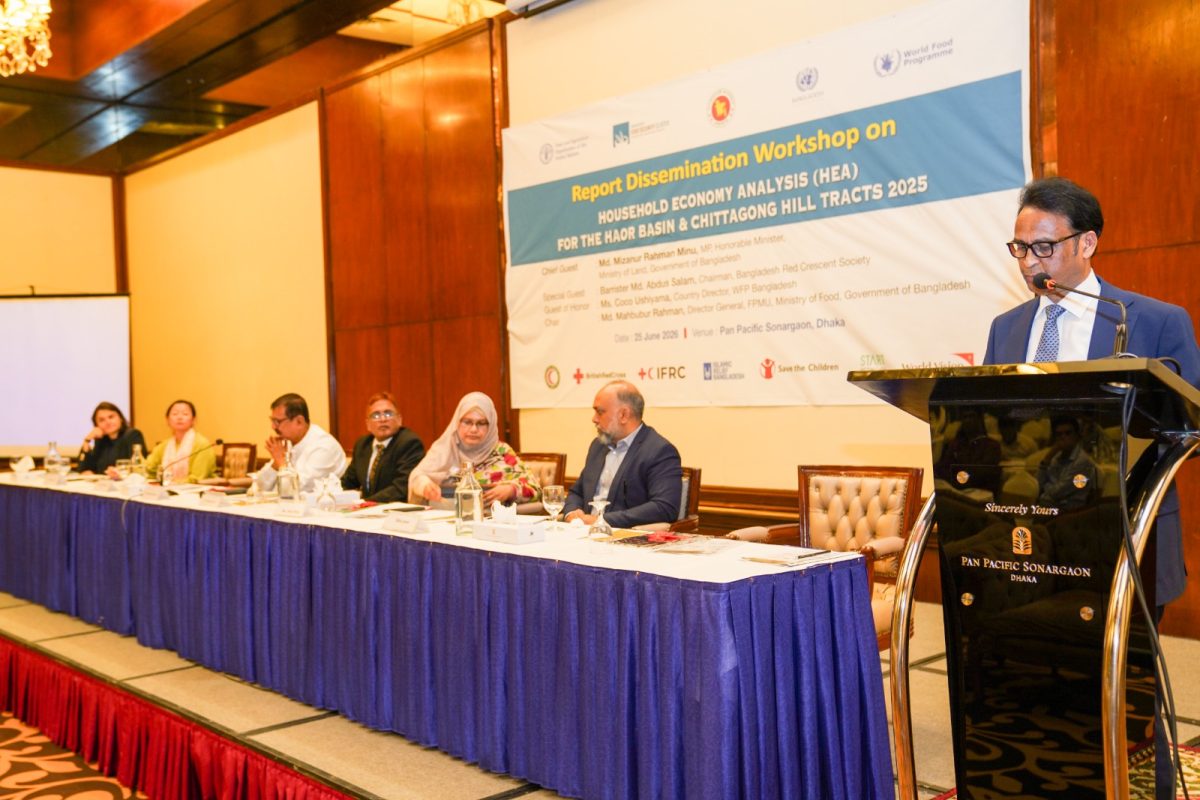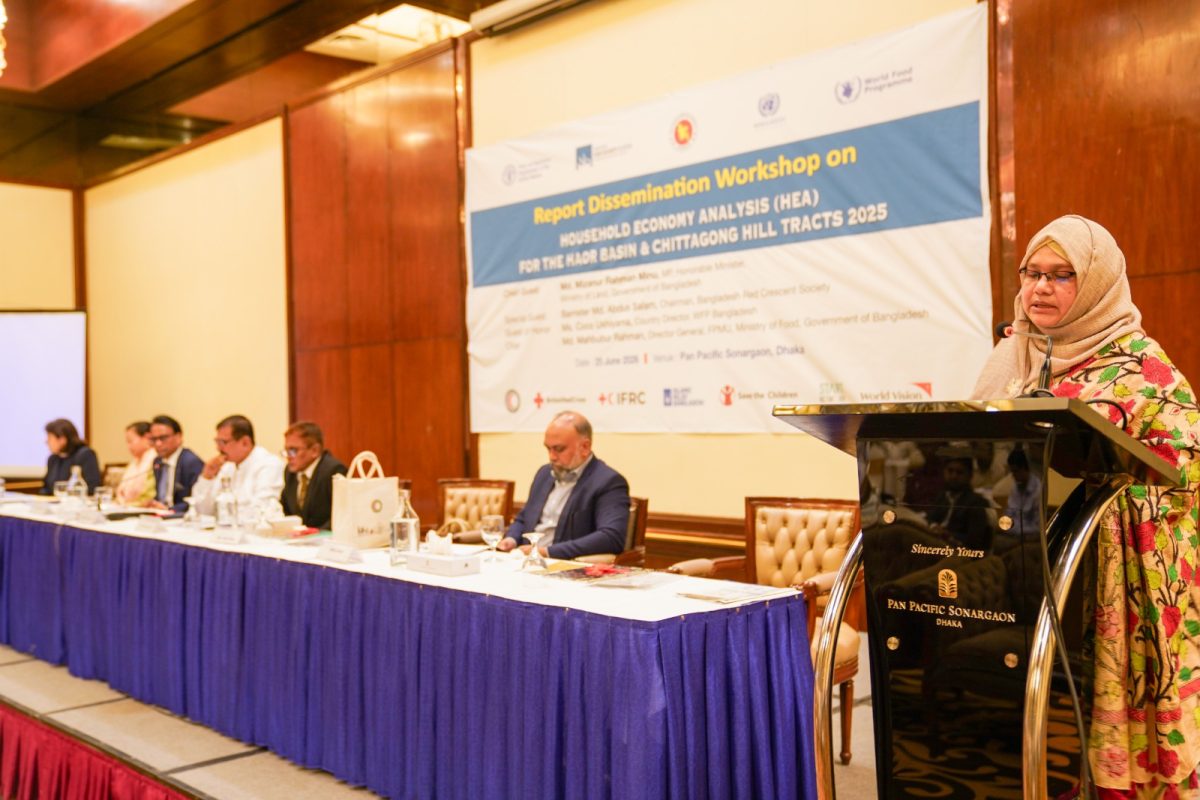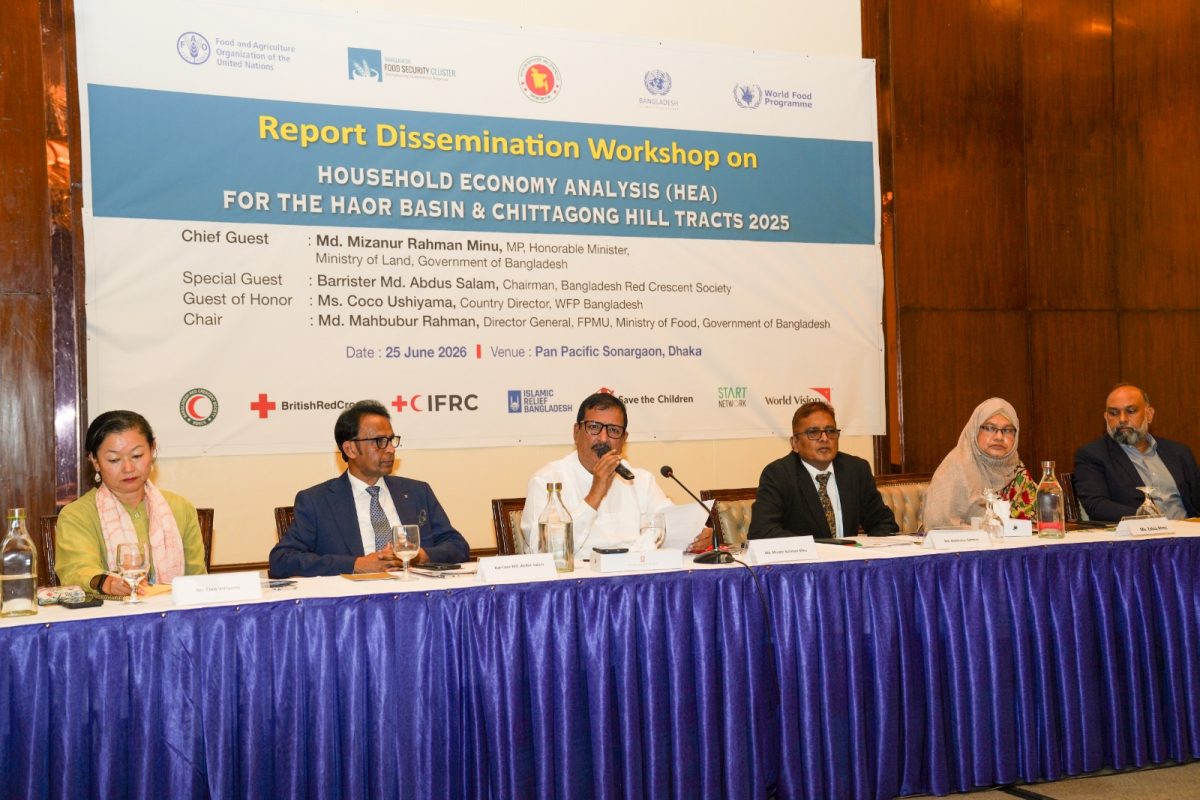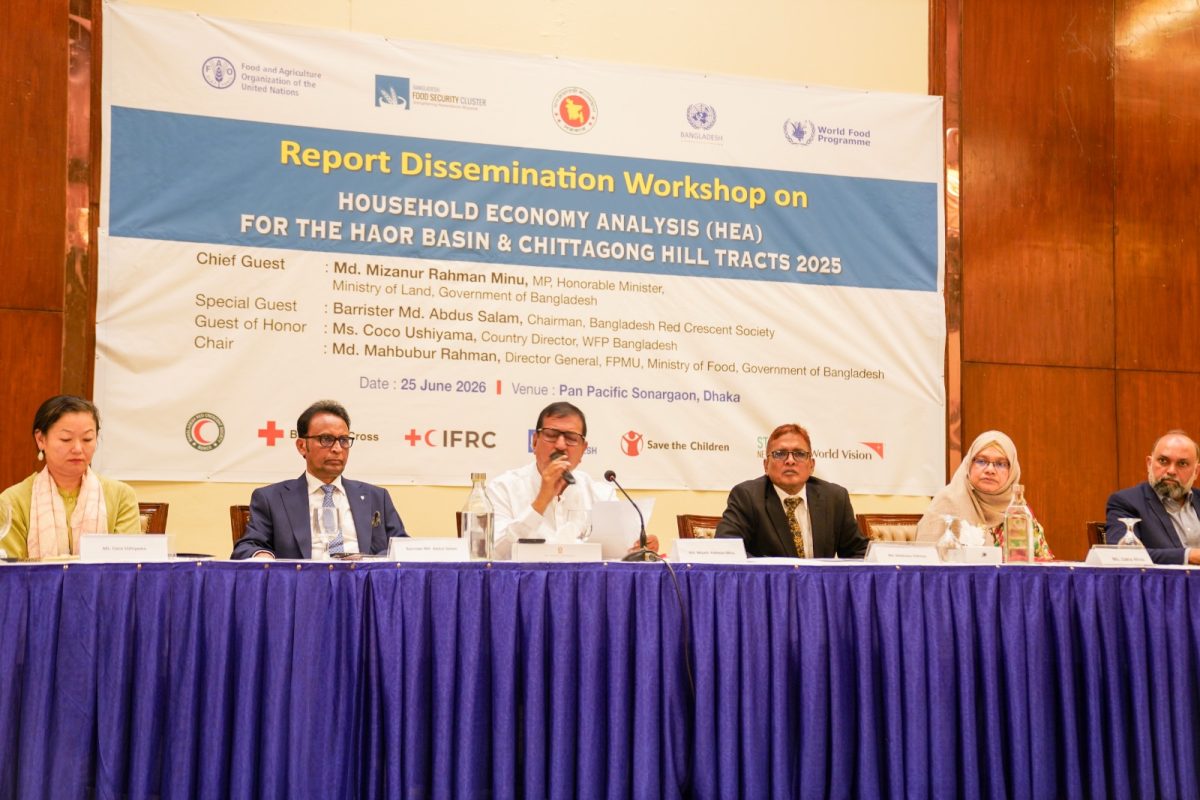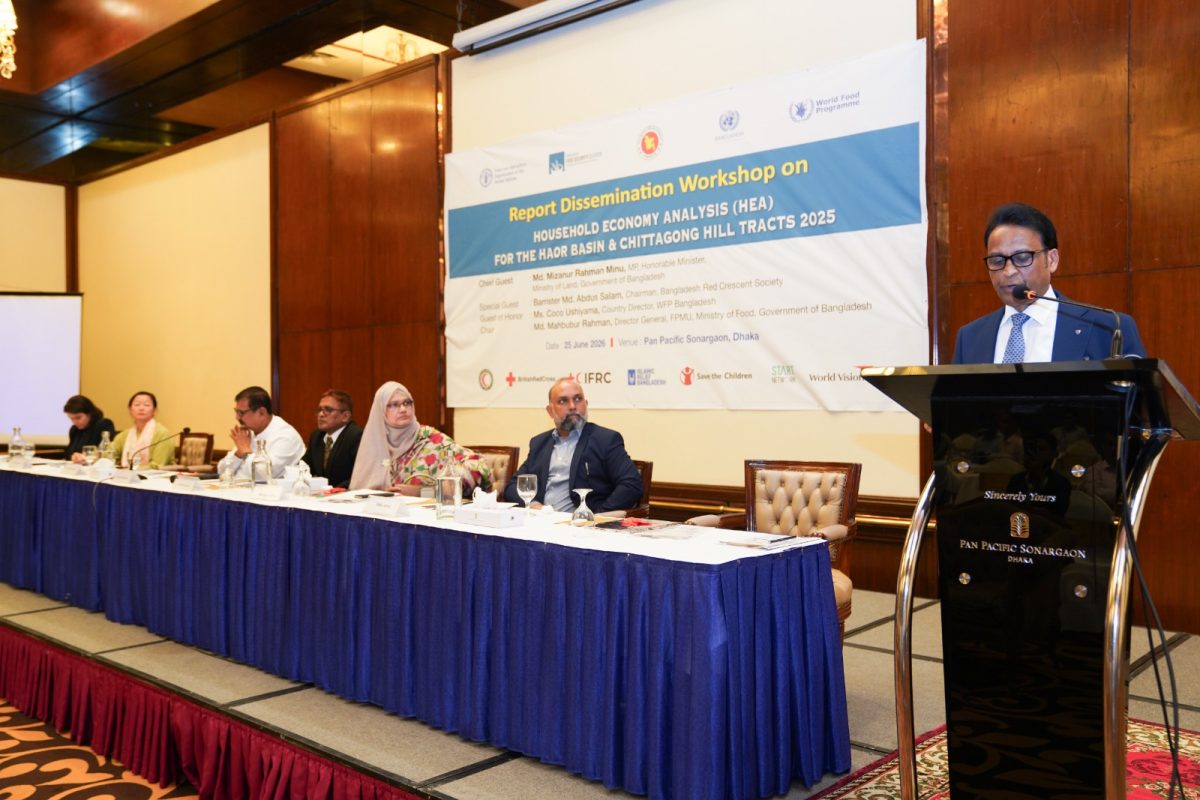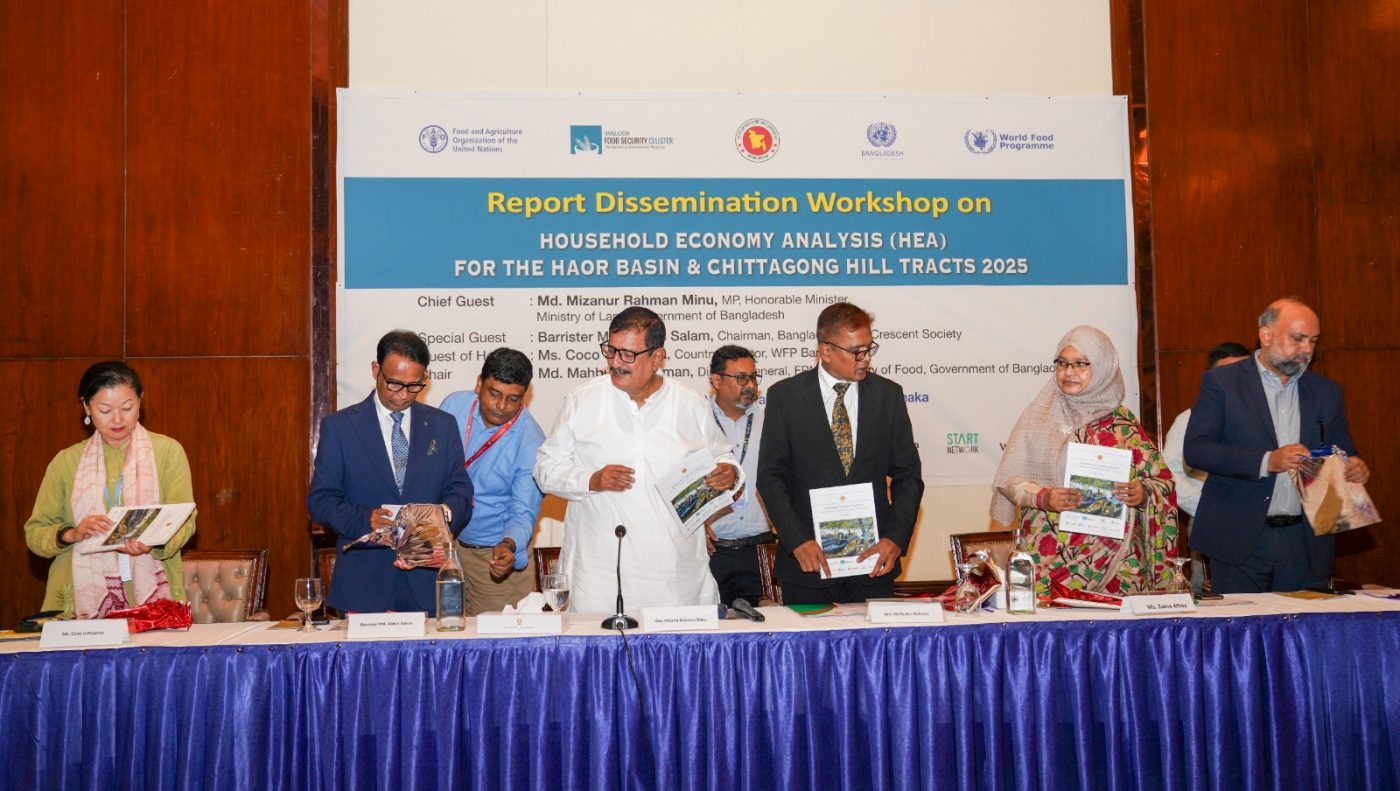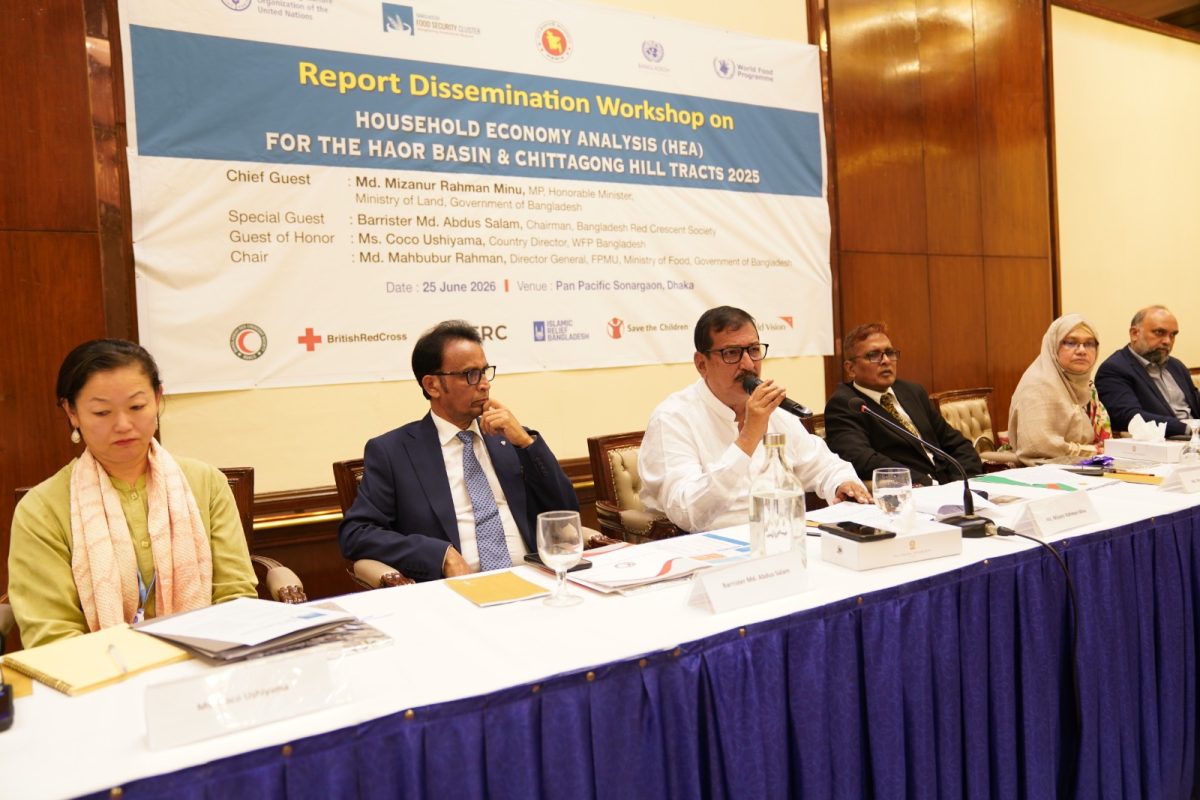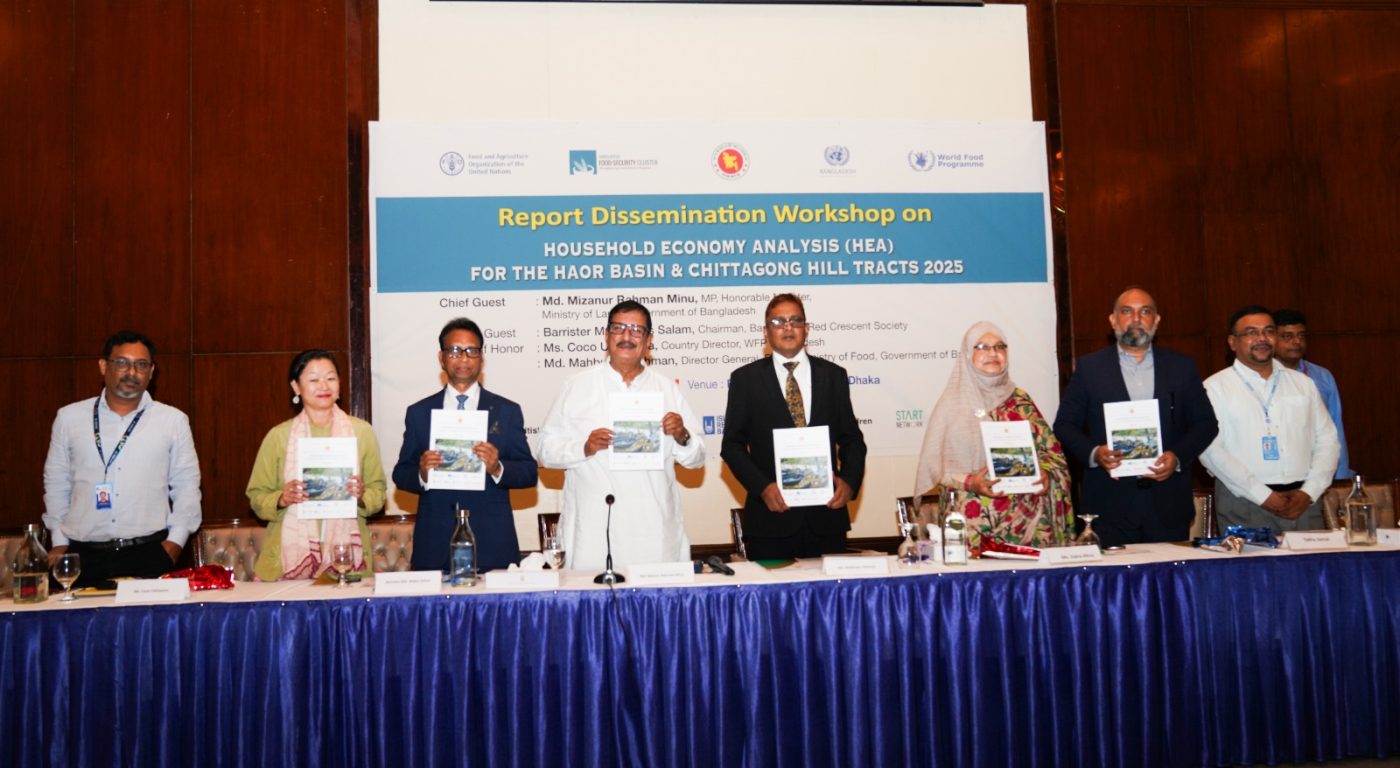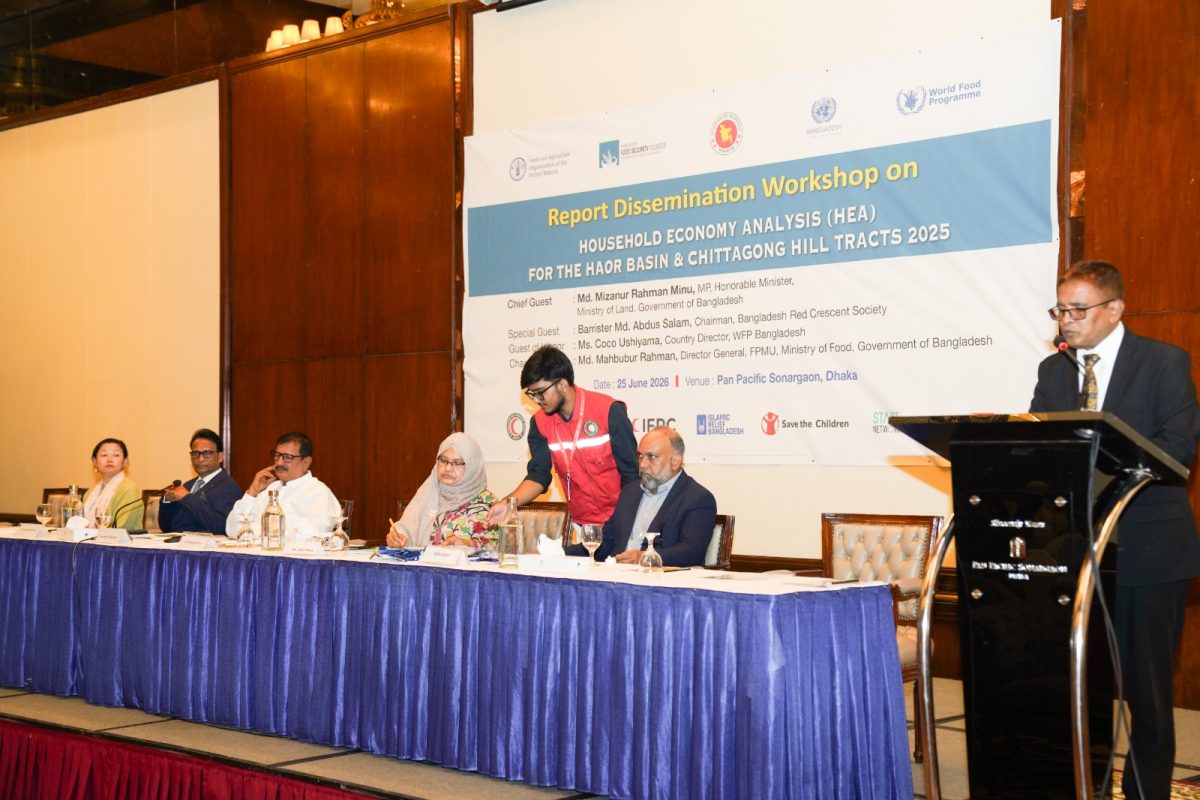
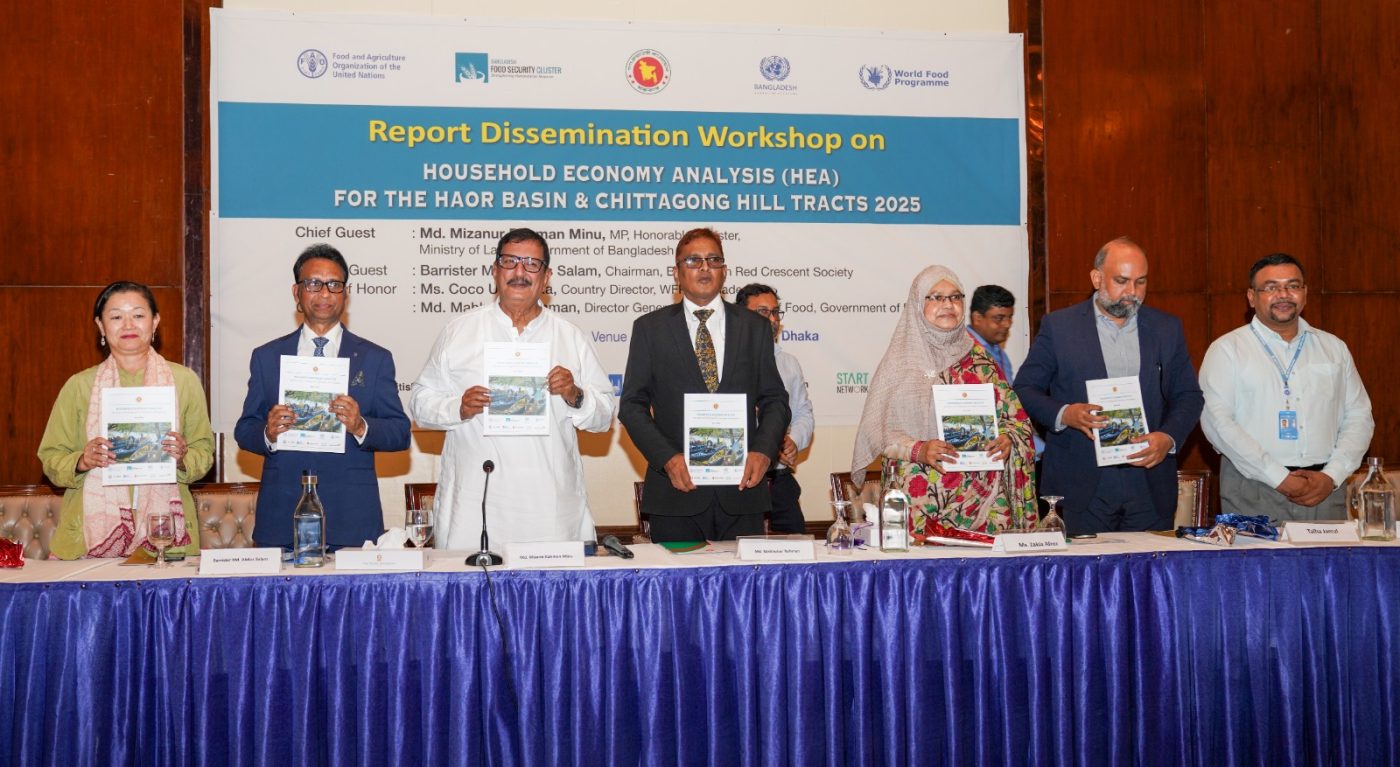
25 June 2026, DHAKA: The Ministry of Food, together with the Food Security Cluster and its partners, today shared the findings of a new Household Economy Analysis (HEA) covering the Haor Basin and Chittagong Hill Tracts (CHT). The study highlights the growing impact of climate-related disasters on vulnerable households and the urgent need for anticipatory action to protect lives and livelihoods.
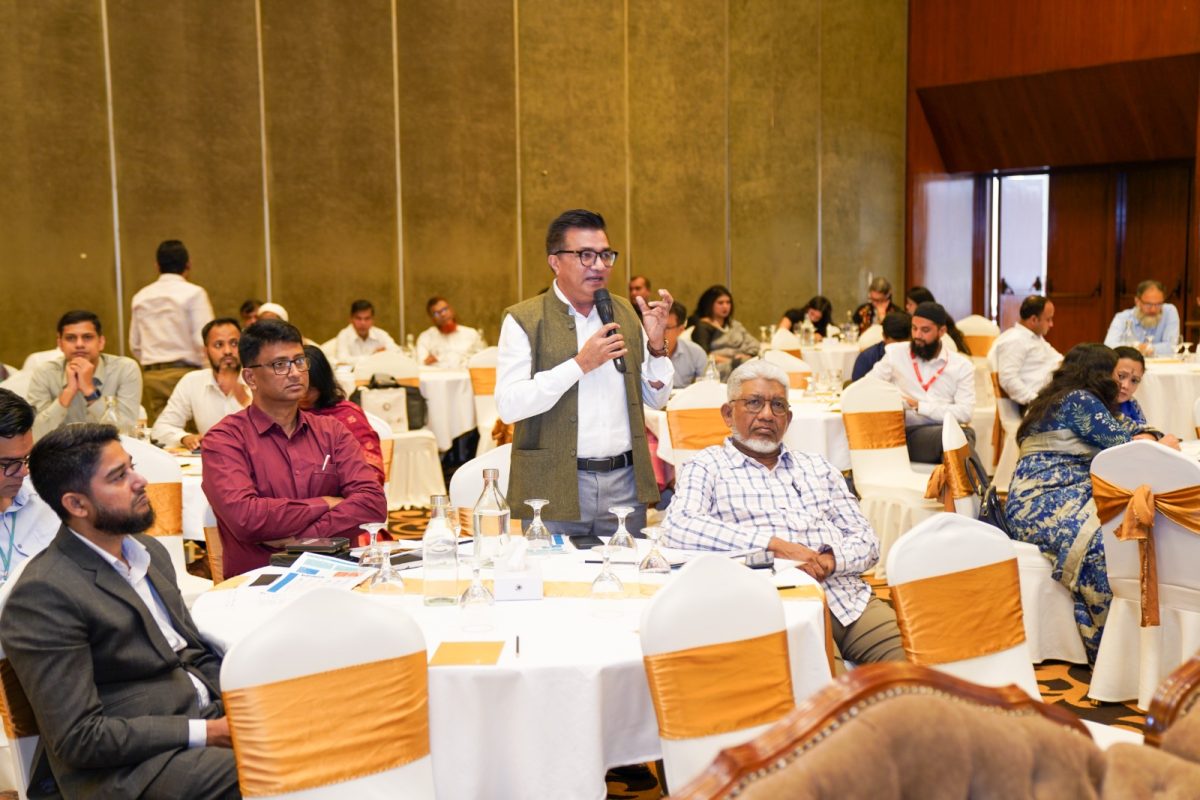
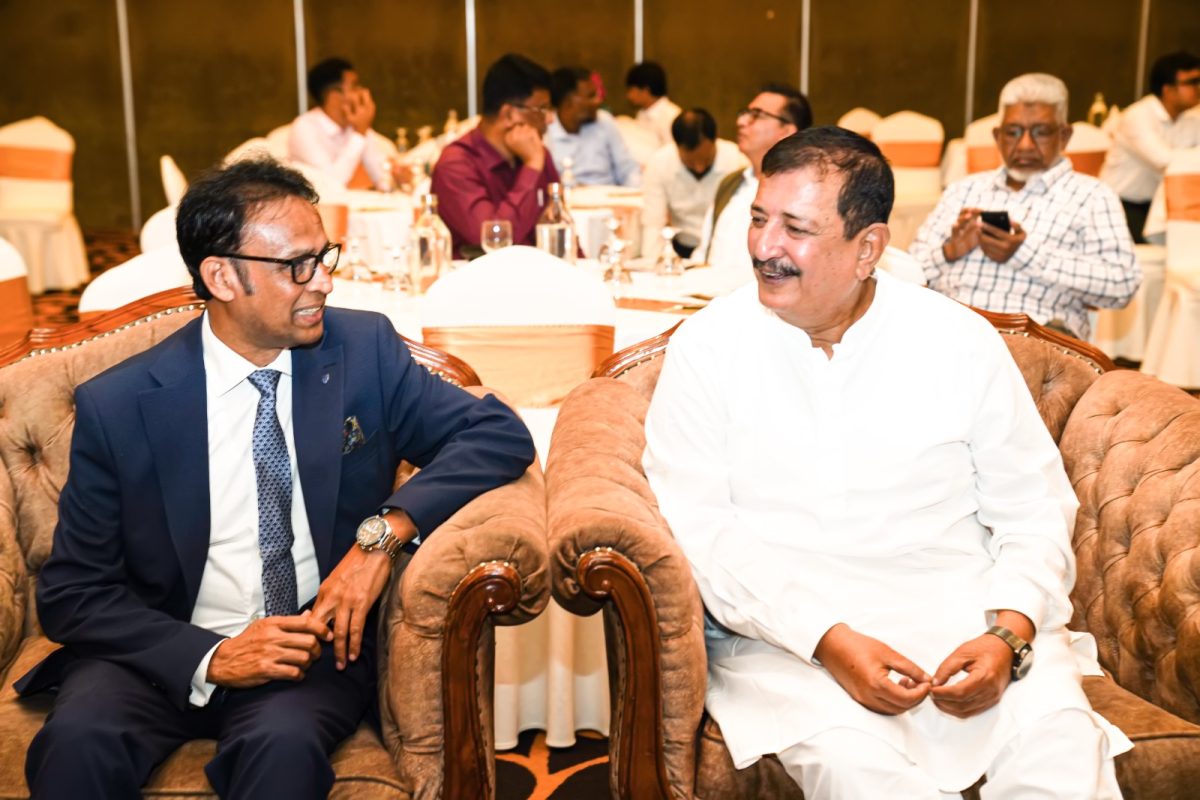
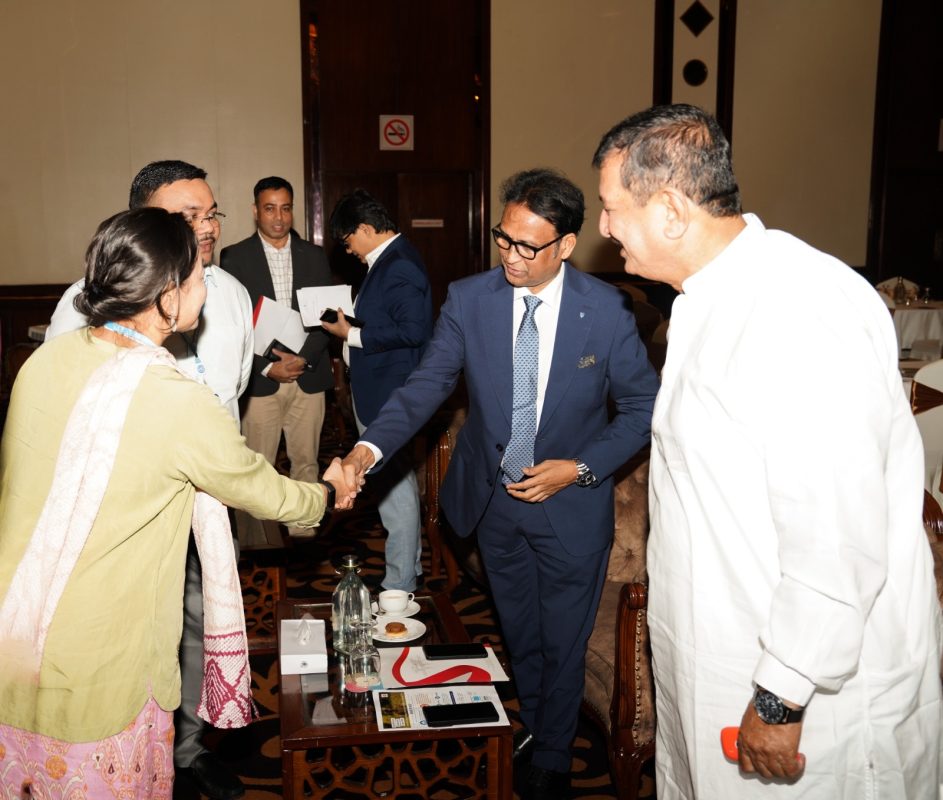
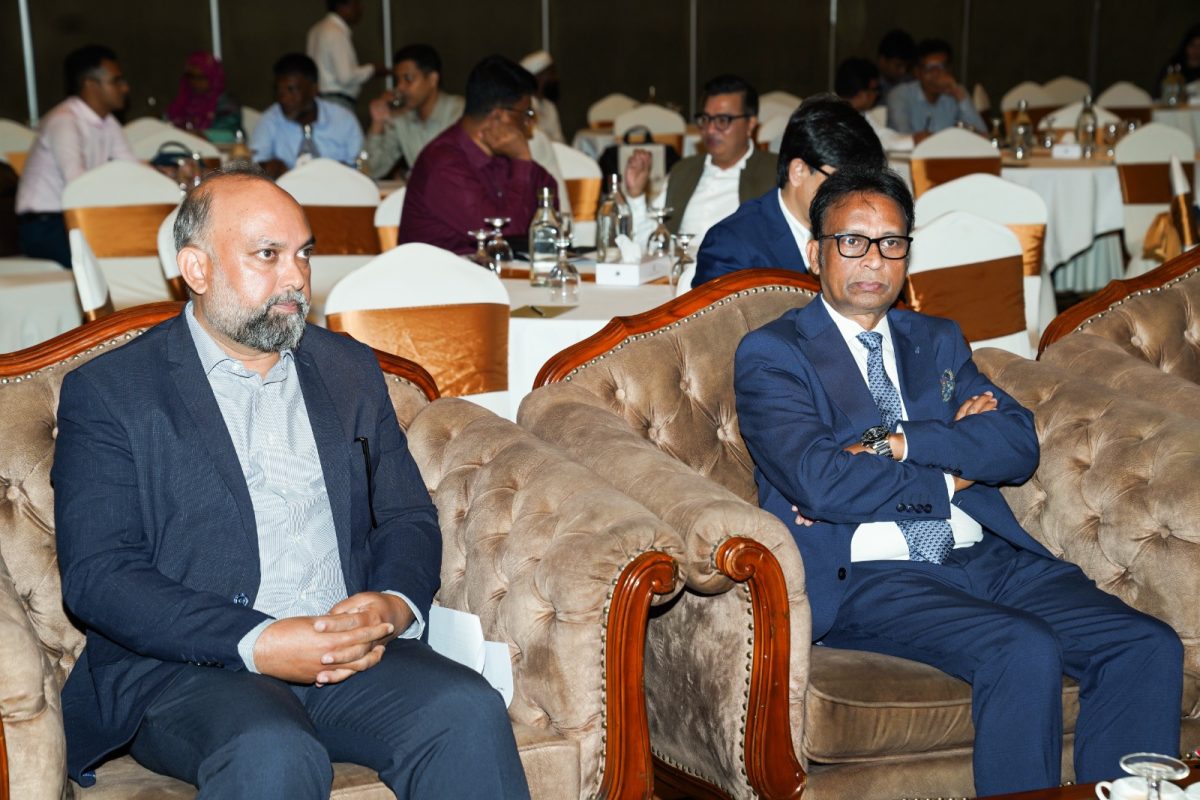
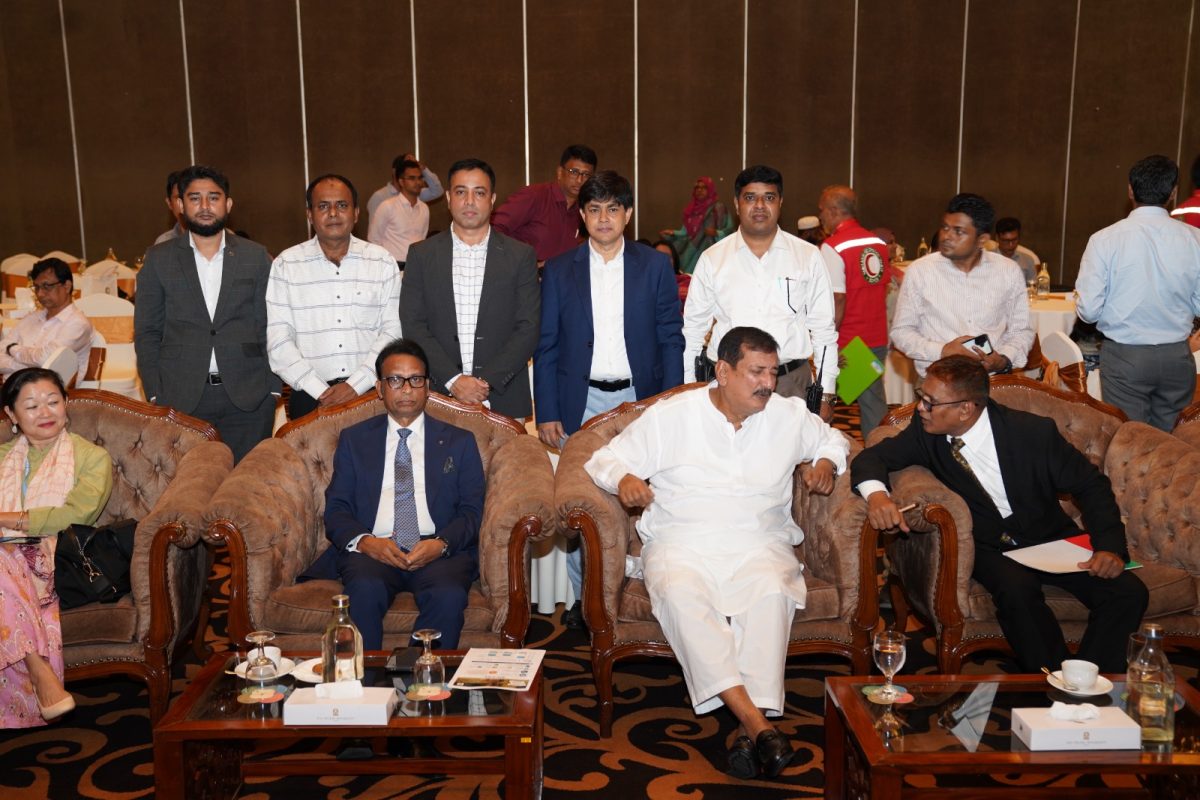
The dissemination event brought together government officials, UN agencies, donors, the Red Cross and Red Crescent Movement, humanitarian organizations, development partners, researchers, and media representatives.
The HEA provides a detailed understanding of how households earn income, access food, and cope with shocks in some of Bangladesh’s most climate-vulnerable regions.
Speaking at the event, Md. Mizanur Rahman Minu, MP, Honorable Minister of Land, said:
“This report is much more than a research document. It provides practical evidence to help us better understand vulnerability, strengthen preparedness, and protect the livelihoods of people most at risk from disasters.”
The analysis found that agriculture remains the main source of livelihood in both regions. However, extremely poor households remain heavily dependent on daily wage labor and market purchases for food. The findings also show that these households have limited coping capacity and remain highly vulnerable to climate-related shocks and market disruptions.
The study further reveals that severe flash floods in the Haor region can reduce the income of extremely poor households by more than 20 percent, potentially pushing many families below the survival threshold and threatening their ability to meet basic food and essential needs.
Barrister Md. Abdus Salam, Chairman of Bangladesh Red Crescent Society, said:
“At the Bangladesh Red Crescent Society, we believe that by combining evidence, volunteerism, and strong partnerships, we can transform vulnerability into resilience and build a safer, stronger, and more prosperous Bangladesh.”
Ms. Coco Ushiyama, Country Director of WFP Bangladesh and Guest of Honor, added:
“The HEA provides valuable evidence that will help government and partners design better programmes to strengthen food security and resilience for vulnerable communities.”
The report also highlights the important contribution of women to household economies. Women contribute between 8.6 and 9.2 percent of the total income of extremely poor households through homestead gardening, livestock rearing, forest-product collection, handicrafts, tea plantation work, and other home-based enterprises.
The findings will help guide future investments in anticipatory action, shock-responsive social protection, climate-resilient livelihoods, and disaster preparedness to reduce the impact of climate shocks on vulnerable communities.
The study was jointly conducted by the Food Security Cluster, the Food Planning and Monitoring Unit (FPMU) of the Ministry of Food, FAO, WFP, UN Resident Coordinator’s Office (UNRCO), Start Network, Bangladesh Red Crescent Society (BDRCS), British Red Cross, International Federation of Red Cross and Red Crescent Societies (IFRC), Save the Children, Islamic Relief Bangladesh, World Vision, CARE Bangladesh, Action Against Hunger, Caritas Bangladesh, and other partners.