
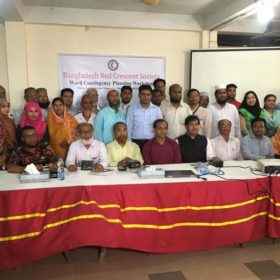
Barrister Md. Abdus Salam assumed the office of Chairman of the Bangladesh Red Crescent Society (BDRCS) on 20 June 2026, bringing to the role more than three decades of legal practice, institutional leadership, and hands-on humanitarian work across Bangladesh and the United Kingdom. His appointment unites a rare combination of dual-jurisdiction legal expertise, proven organisation-building experience, and a personal record of disaster relief and community welfare that stretches back to the 1990s — the very qualities the Society’s founding principles of humanity, impartiality, and service demand of its leadership.
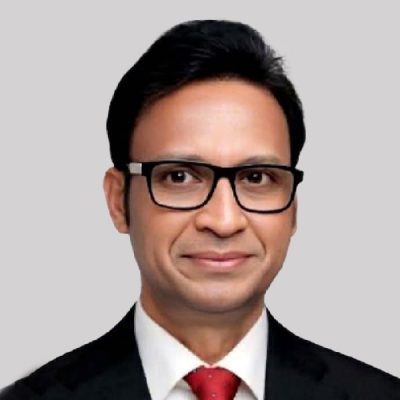
Barrister Md. Abdus Salam
Chairman
Bangladesh Red Crescent Society (BDRCS)
Early Life and Education
Born on 1 November 1965 in Rayban village, Dakshin Surma Upazila, Sylhet, Barrister Salam grew up in a family with a long-standing tradition of education and community service — a tradition that would shape the course of his life. He completed his early education at local institutions in Dakshin Surma before earning distinction in his Higher Secondary studies at the region’s premier science stream. He went on to read Political Science at the University of Dhaka, graduating with both a Bachelor’s and a Master’s degree (1987–1991), alongside a law degree from Dhaka Law College.
He later travelled to the United Kingdom for advanced legal training, completing an LLB (Hons) and LLM at the University of East London (2003–2006) and a postgraduate diploma in Professional Legal Skills at City University, London (2007). That same year, he was called to the Bar as a Barrister-at-Law by the Honourable Society of Lincoln’s Inn — a credential that, paired with his Bangladeshi legal qualifications, gave him standing to practise across two legal systems.
A Career in the Law
Barrister Salam’s legal career began in 1993, when he joined the Sylhet District Bar Association — a practice he has maintained continuously since. Following his call to the Bar in London, he was admitted as an Advocate of the Supreme Court of Bangladesh in both the High Court and Appellate Divisions, building a practice spanning constitutional law, administrative law, human rights, and public interest litigation.
He has practised law in both Bangladesh and the United Kingdom simultaneously for close to two decades, since settling in the UK in 1997 as a British-Bangladeshi dual national. He is a Level 3 OISC-accredited legal adviser, with more than sixteen years’ experience advising on immigration, asylum, and human rights matters, and has appeared regularly before the courts and tribunals of England and Wales — including the County Court, Magistrates’ Court, Family Court, Crown Court, and the Employment and Immigration Tribunals — handling everything from possession hearings and case management to bail applications, skeleton arguments, and full immigration appeals. He maintains this UK practice alongside an active advocacy practice before the Supreme Court of Bangladesh, dividing his professional time between the two jurisdictions each year and drawing on trusted colleagues in both countries to ensure continuity of service to clients.
Today he maintains chambers in Dhaka, Sylhet, and London: he is the Founder and Principal of Barrister Salam & Associates in Dhaka, with an allocated chamber at the Supreme Court’s Annex Building in Ramna, and Principal Adviser at East London Law Chambers on Whitechapel Road in the United Kingdom. He holds memberships of the Honourable Society of Lincoln’s Inn, the General Council of the Bar of England & Wales, the Bangladesh Bar Council, and the International Bar Association. Earlier in his career, he also served as a Lecturer and Head of the Department of Political Science at Dakshin Surma Degree College, Sylhet (1992–1996), and in London held advisory roles with the NHS, Age Concern Tower Hamlets, and Social Action for Health, focused on community welfare, state benefits, and public health support for elderly and disadvantaged residents.
A Lifetime of Humanitarian Service
Long before his election to lead BDRCS, Barrister Salam had built a reputation as a tireless community organiser and philanthropist. In 2007, he established Bibi’s Trust, a charitable foundation named for his family, which has since become the vehicle for a wide-ranging and sustained programme of welfare work across Sylhet. Through the Trust, he has overseen the construction of homes for families with nowhere else to turn; the installation of shallow and deep tube-wells to bring clean drinking water to underserved villages; the distribution of wheelchairs to people with disabilities; and the provision of rickshaws, vans, sewing machines, and livestock to help families build sustainable, independent livelihoods rather than depend on one-off charity.
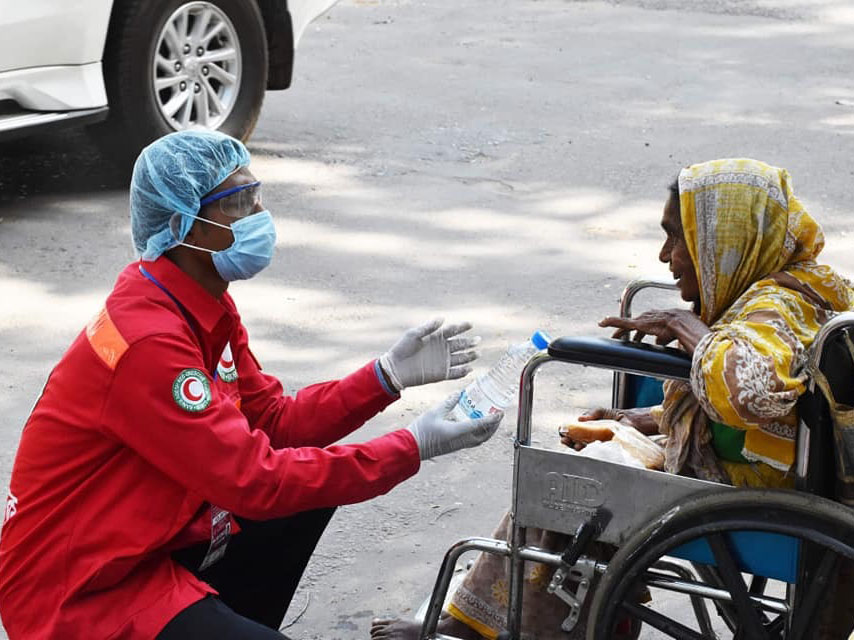
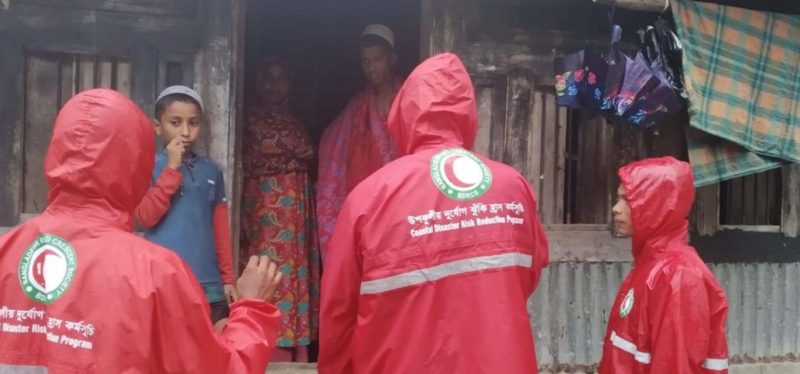
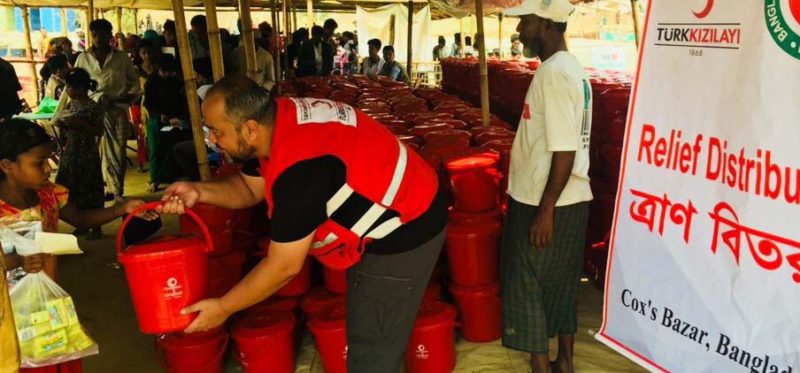
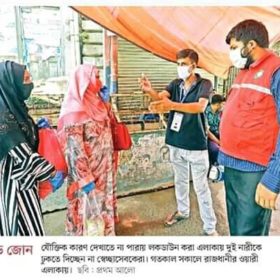
His disaster response work has been especially consistent. During the COVID-19 pandemic, Bibi’s Trust delivered food quietly and steadily, month after month, to some of the most remote households in his home constituency — support that reached families with little other recourse during the lockdowns. The Trust has repeated this pattern during successive flood and drought emergencies in the Sylhet region, providing emergency food packages, cash assistance, and rebuilding materials — corrugated iron sheeting, construction supplies — to families who lost their homes. Every Ramadan, the Trust distributes food and iftar packages, cash gifts, and Eid clothing to those in need, and every winter it distributes blankets and warm clothing to families exposed to the cold. It has also funded medical camps and free eye-care services, supported the marriage expenses of underprivileged young couples, and provided scholarships to meritorious students from low-income households — support Barrister Salam has, for many years, funded in part directly from his own income.
This humanitarian instinct extends across religious and community lines: he is a regular patron of mosques, madrasas, and orphanages throughout Sylhet district, has long supported Durga Puja celebrations within the district’s Hindu community, and has consistently stood by families facing hardship regardless of political or religious affiliation. He has been a long-standing life member of the Bangladesh Red Crescent Society, and his humanitarian response to the region’s recurring disasters — long predating his chairmanship — has been widely recognised locally.
Institution-Building and Education
A committed institution-builder, Barrister Salam founded Lawyers Voice International (LVI), an international NGO dedicated to human rights, the rule of law, and good governance, where he continues to serve as Chairperson. He is also a former Secretary General of the Village Advancement and Welfare Association of Bangladesh (VAAB), which led nationwide rural development programmes.
His commitment to education runs just as deep. He has founded and supported a network of schools and educational institutions across Sylhet — including Nobarun High School, Boiragibazar High School, Dakshin Surma College, Ekota Academy, and Protiva Kindergarten — as well as Protiva Pathagar, a public library he established to advance literacy in his home area. He serves as Governing Body President of Haji Israb Ali High School & College (established 1935) and General Secretary of the Dakshin Surma Government Degree College Governing Body, and holds life membership of Syed Kutub Jalal High School. He also founded the Protiva Gold Cup football tournament, a long-running initiative to channel local youth energy into sport and community life.
International Engagement
Barrister Salam’s professional life has taken him before a wide range of international institutions and audiences on questions of human rights, democratic governance, and the rule of law — including the United Nations, the European Union, the Commonwealth Secretariat, and the United Kingdom Parliament — and he has participated in academic and policy discussions at institutions including the London School of Economics, Queen Mary University of London, and Imperial College London. This sustained international engagement has given him a working familiarity with multilateral institutions and cross-border humanitarian coordination that few incoming leaders bring to the role.
Leadership at BDRCS
As Chairman of the Bangladesh Red Crescent Society, Barrister Md. Abdus Salam now brings together his legal training, his experience building and governing institutions, and — above all — decades of direct, hands-on humanitarian work in some of Bangladesh’s most disaster-prone communities. It is a combination well suited to the task ahead: guiding the strategic direction of the country’s oldest and largest humanitarian organisation in service of its founding mission — humanity, impartiality, and unwavering service to the people of Bangladesh.
For more information about him, visit www.masalam.info