

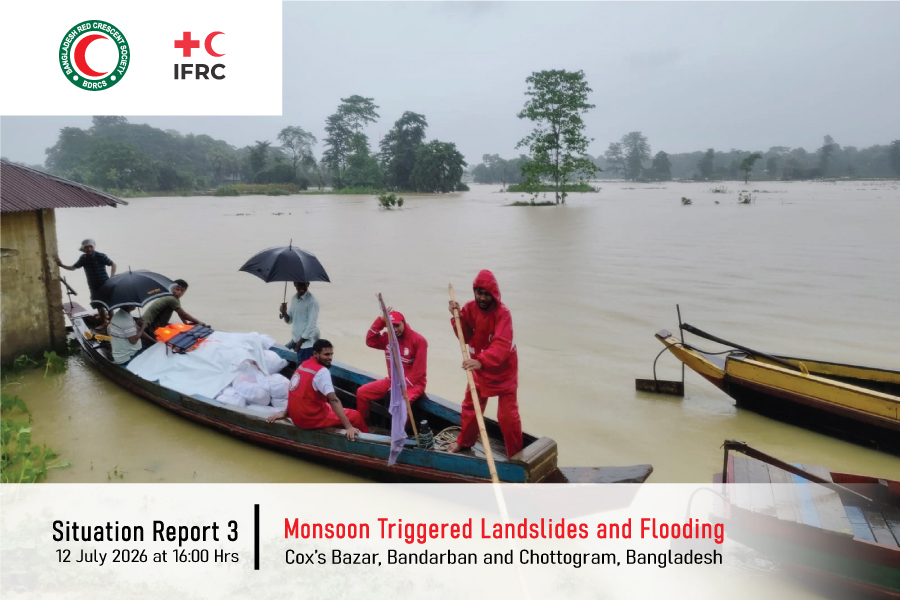
The emergency has now entered its second week and continues to widen in scope. While the low-pressure system that drove the initial spell of extreme rainfall has weakened and moved on over Uttar Pradesh, India, the Bangladesh Meteorological Department (BMD) continues to forecast heavy to very heavy rainfall in spells through 13 July across Chattogram, Sylhet, Rangpur, Rajshahi, Dhaka, Khulna and Barisal divisions. Flooding has spread to new areas, including a breach of the Dhalai river embankment in Kamalganj upazila, Moulvibazar, and rising river levels in Habiganj, while conditions have deteriorated in Satkania, Lohagara, Banshkhali and Chakaria. According to the latest consolidated figures, over 1 million people are now affected nationally across 10 districts, with more than 40 casualties recorded, around 36,500 people temporarily displaced, and more than 1,700 shelters activated.
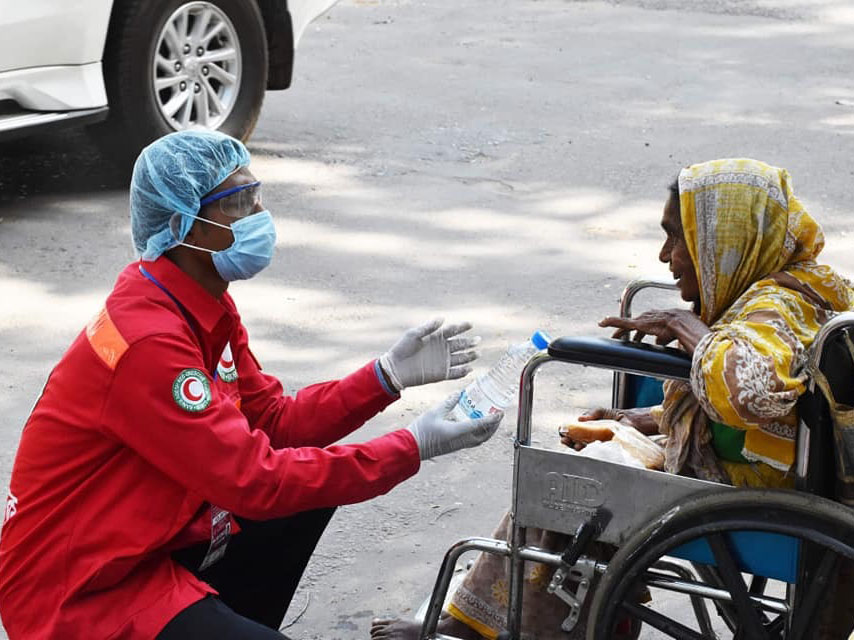
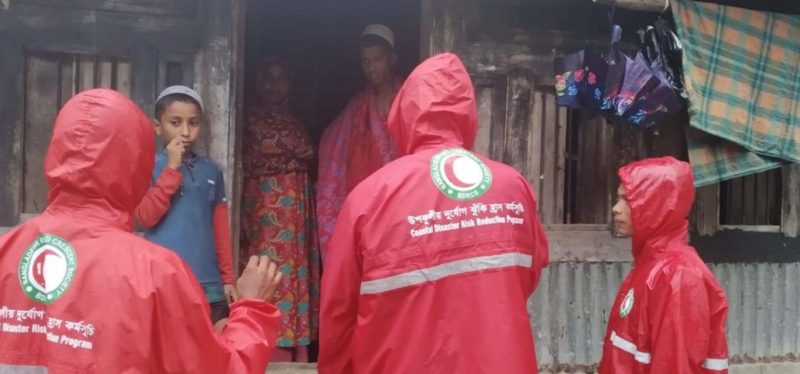
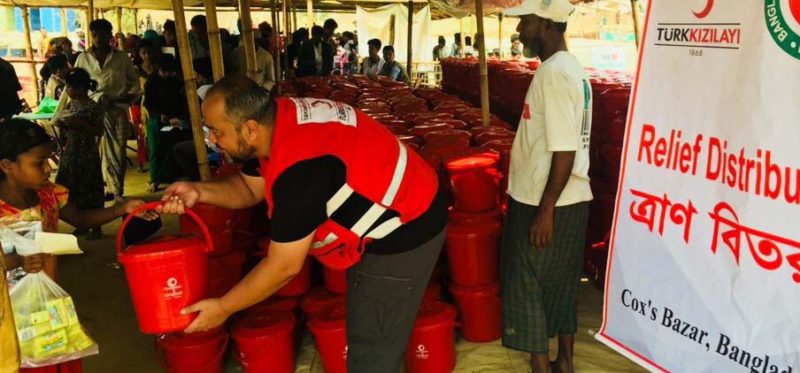
BDRCS continues to monitor the situation through its central Emergency Operations Centre (EOC) and remains in close coordination with its district units, the Population Movement Operation (PMO) in Cox’s Bazar, district administrations, BMD, NAWG and other humanitarian partners. Confirmed funding from the American Red Cross Quick Action Fund, Initial response Fund supported by Swedish Red Cross, Locally Led Disaster Response Fund supported by British Red cross, and a pending IFRC DREF request are supporting an expanded response, with cash allocations now released to Nine district units and Chattogram City Unit. Further rounds of emergency water jerrycans and search-and-rescue items dispatched to twelve units, including newly affected north-eastern districts. Response efforts currently include volunteer mobilization, search and rescue support, public awareness campaigns, evacuation assistance, first aid, emergency food and cash assistance, and preparedness measures in high-risk communities.