
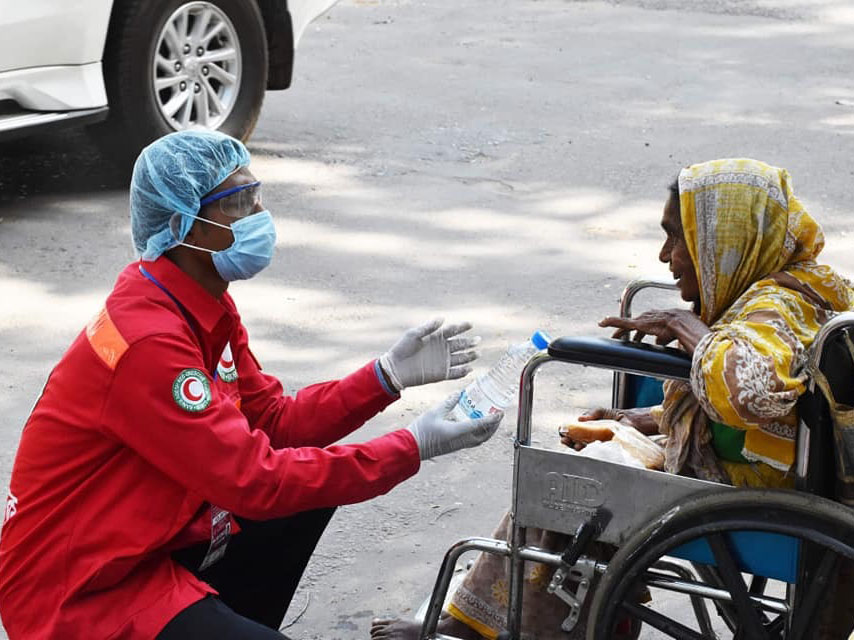
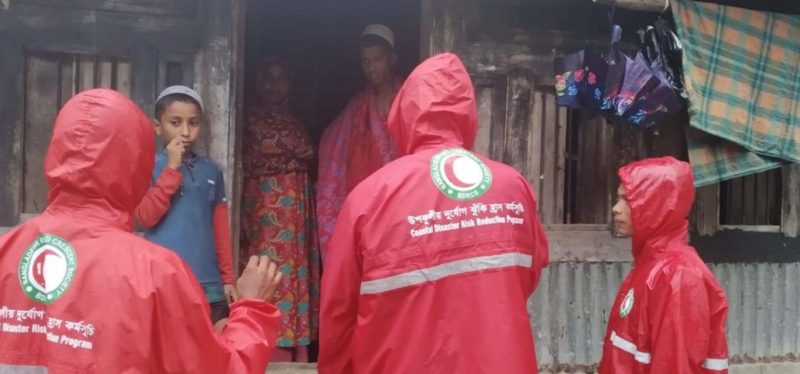
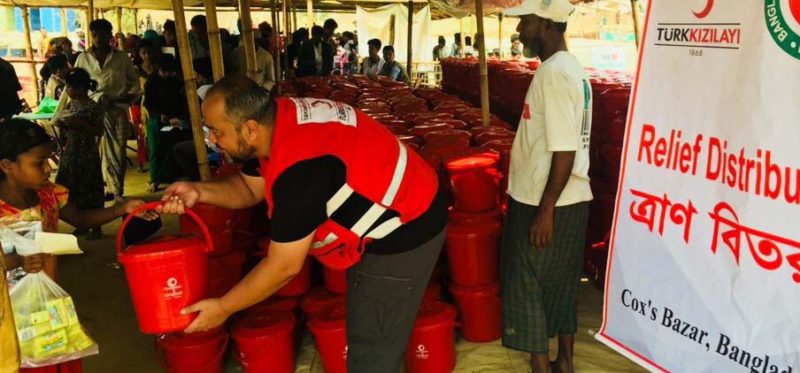
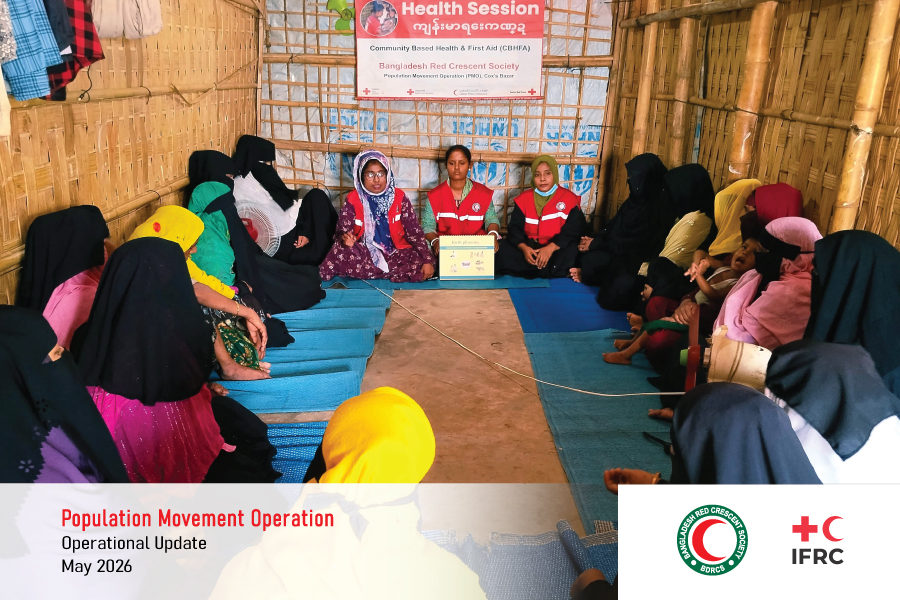
As of May, 1,197,4111 displaced people from Rakhine state of Myanmar live in 33 overcrowded camps in Cox’s Bazar and Bhasan char Island (where 33,792 relocated people live). Nearly nine years of prolonged displacement has been characterized by continuing dependency on humanitarian assistance, influx of new arrivals since 2024 (currently 152,029) due to renewed violence in Rakhine – driven to 19% population surge, funding shortfall despite strain on available resources, incidence of multi-hazard and deterioration of security situation. The population comprises 52% female and 48% male, while 78% of them are women and children as well as 12% are Persons with Specific Needs (PSNs) including persons with disabilities, elderly person, single parents.
The 2026 Joint Response Plan (JRP)2 budget cycle was officially published with Government approval, requesting USD 710 million, 26% less than the 2025 appeal, despite an estimated 220,000 new arrivals, including 150,000 biometrically identified. The plan places greater emphasis on the humanitarian development nexus, although the Government raised concerns over its development focus. Meanwhile, funding shortfalls have driven WFP to adopt a targeted food assistance approach, reducing rations to 3 value categories (USD 12, 10, and 7) based on household vulnerability. As 17% of households now receive only USD 7, concerns are growing over worsening food insecurity and increased risks of malnutrition.
Security concerns remained heightened during May 2026, driven by intensifying conflict in Rakhine State, persistent cross border armed clashes, drug trafficking, and human trafficking. Rising tensions between host and camps communities, including vandalism at a health facility, continue to raise operational and protection risks, prompting strengthened community engagement and facility security measures.